What Is a Blockchain Network (ETH, Solana, etc.)

Beginners and intermediate learners worldwide who want a clear, practical understanding of blockchain networks like Ethereum, Solana, and others.

When people talk about Ethereum, Solana, or Polygon, they are talking about blockchain networks—shared computers made of many independent nodes that agree on the same history of transactions. Instead of one company owning the database, thousands of machines around the world store and update a common ledger. These networks are where crypto assets move, smart contracts run, and decentralized apps (dApps) live. They decide how fast your transaction confirms, how much you pay in fees, and how secure your assets are. In this article, you’ll learn what a blockchain network actually is, the core pieces that make it work, and how a transaction flows from your wallet to the chain. We’ll also compare Ethereum, Solana, and other major networks, look at real use cases, and give you a safe path to try your first network in practice.

Quick Summary: What Is a Blockchain Network?

Summary

  • A blockchain network is shared infrastructure where many nodes store and update the same transaction history.
  • Ethereum, Solana, BNB Chain, and Polygon are examples of separate networks with their own rules and native tokens.
  • Networks use consensus mechanisms so independent nodes can agree on which transactions are valid.
  • Smart-contract networks let developers deploy code that runs on-chain and powers dApps, DeFi, NFTs, and more.
  • Different networks make trade-offs between decentralization, security, speed, and transaction fees.
  • You can usually access a network with a wallet app, without running your own node or managing servers.

From the Internet to Blockchain Networks: A Simple Analogy
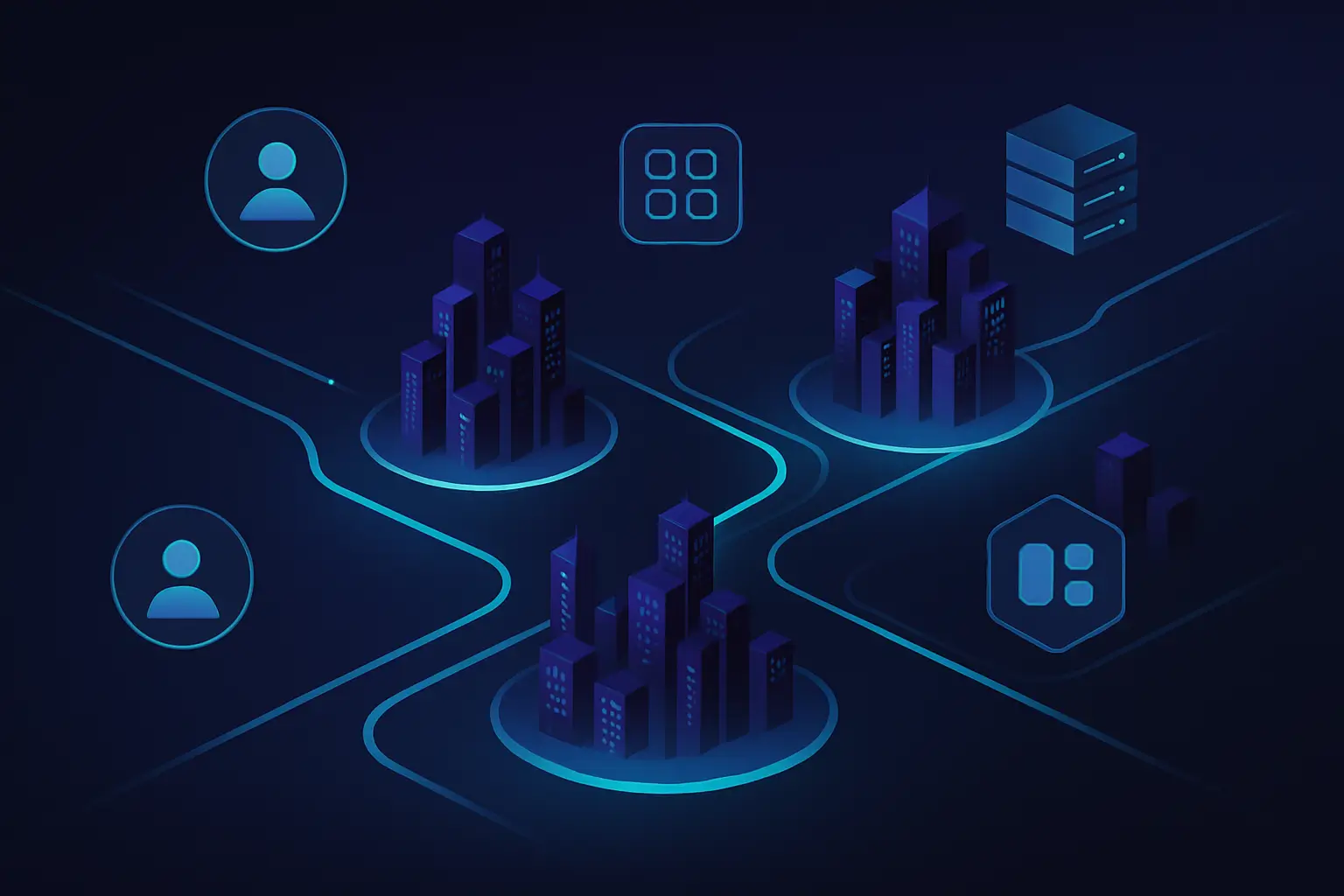
Imagine each blockchain network as a digital city. Ethereum is one large, busy city with many businesses, services, and people, but with crowded roads that can make travel slower and more expensive. Solana is like a newer city with high-speed trains and cheaper tickets, but with different building codes and a smaller, more concentrated group running the infrastructure. In these cities, dApps are like shops and services, and your wallet is your personal ID and payment card. You choose which city to visit based on what you want to do: trade tokens, mint NFTs, play games, or send stablecoin payments. Another way to see it is as operating systems for money and apps. Ethereum, Solana, and others are like different OSes, each with its own rules, performance, and developer tools. As a user or builder, you pick the environment whose trade-offs best match your needs.
Article illustration
Networks As Digital Cities

Core Building Blocks of a Blockchain Network

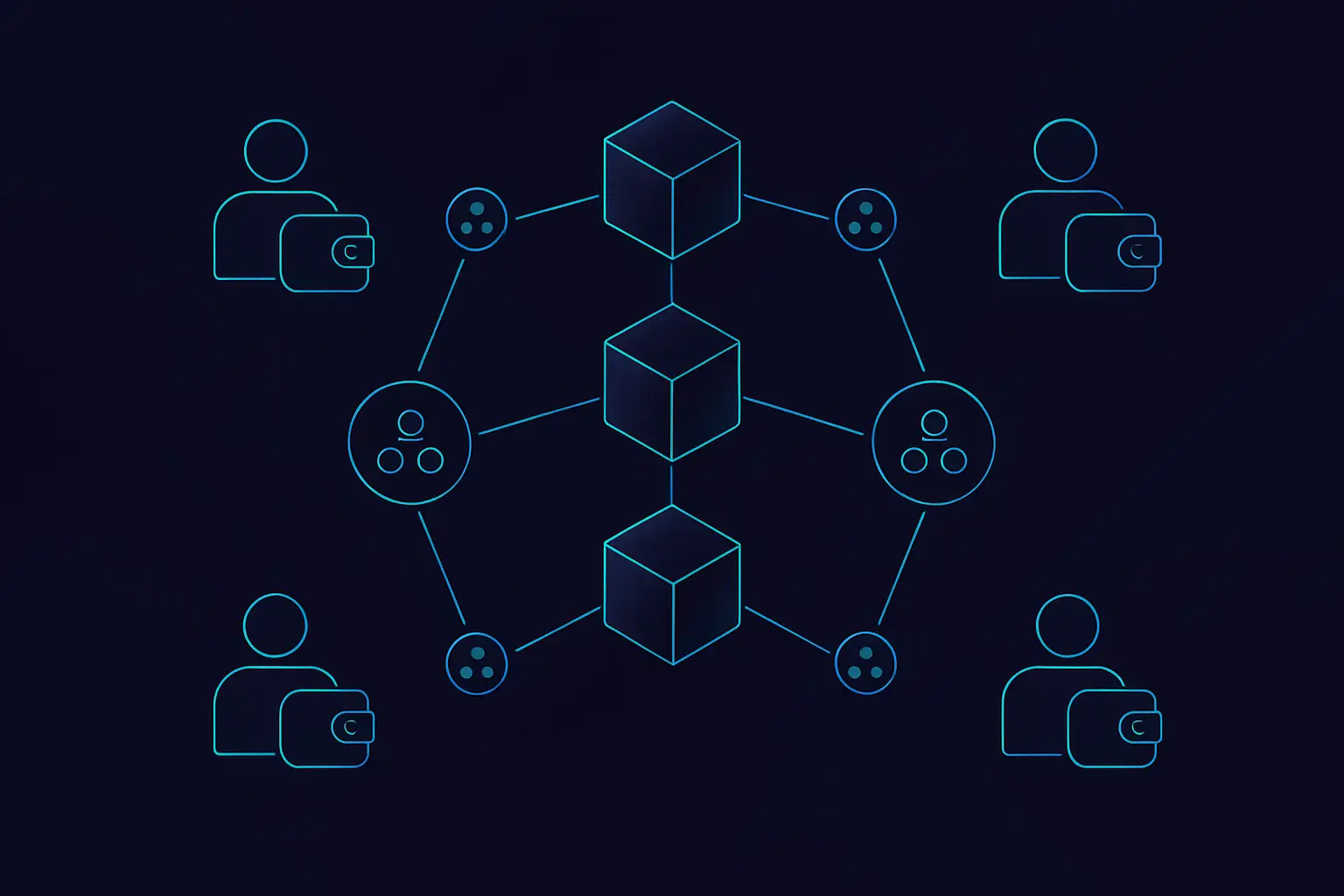
Under the hood, every blockchain network is built from a few core components that work together. Once you recognize these pieces, it becomes much easier to compare Ethereum, Solana, and other chains. Most networks have nodes and validators, a shared ledger of blocks, a consensus mechanism, a native token, and often smart contracts plus wallets or clients. The details differ, but the overall pattern is similar across chains.
  • Nodes and validators: Computers that run the network’s software, store the ledger, and relay transactions; validators propose and validate new blocks.
  • Blocks and ledger: Transactions are grouped into blocks, which are linked together to form an ordered, tamper-resistant history known as the blockchain.
  • Consensus mechanism: The rules (like proof-of-stake or proof-of-work) that let nodes agree on which blocks are valid and in what order.
  • Network protocol: The communication rules that define how nodes find each other, share transactions, and stay in sync.
  • Native token: The main asset of the network (ETH on Ethereum, SOL on Solana) used to pay fees and often to secure the chain via staking.
  • Smart contracts: On programmable chains, pieces of code deployed on-chain that automatically run logic for DeFi, NFTs, games, and more.
  • Clients and wallets: Software that lets users and developers interact with the network, sign transactions, and view balances without running a full node.
Article illustration
Core Network Pieces

Pro Tip:A network is the infrastructure and rules; a token is just one asset that lives on top of it. For example, Ethereum is the network, ETH is its native token, and thousands of other tokens (like USDC) also live on the same Ethereum network.

How a Blockchain Network Works Step by Step

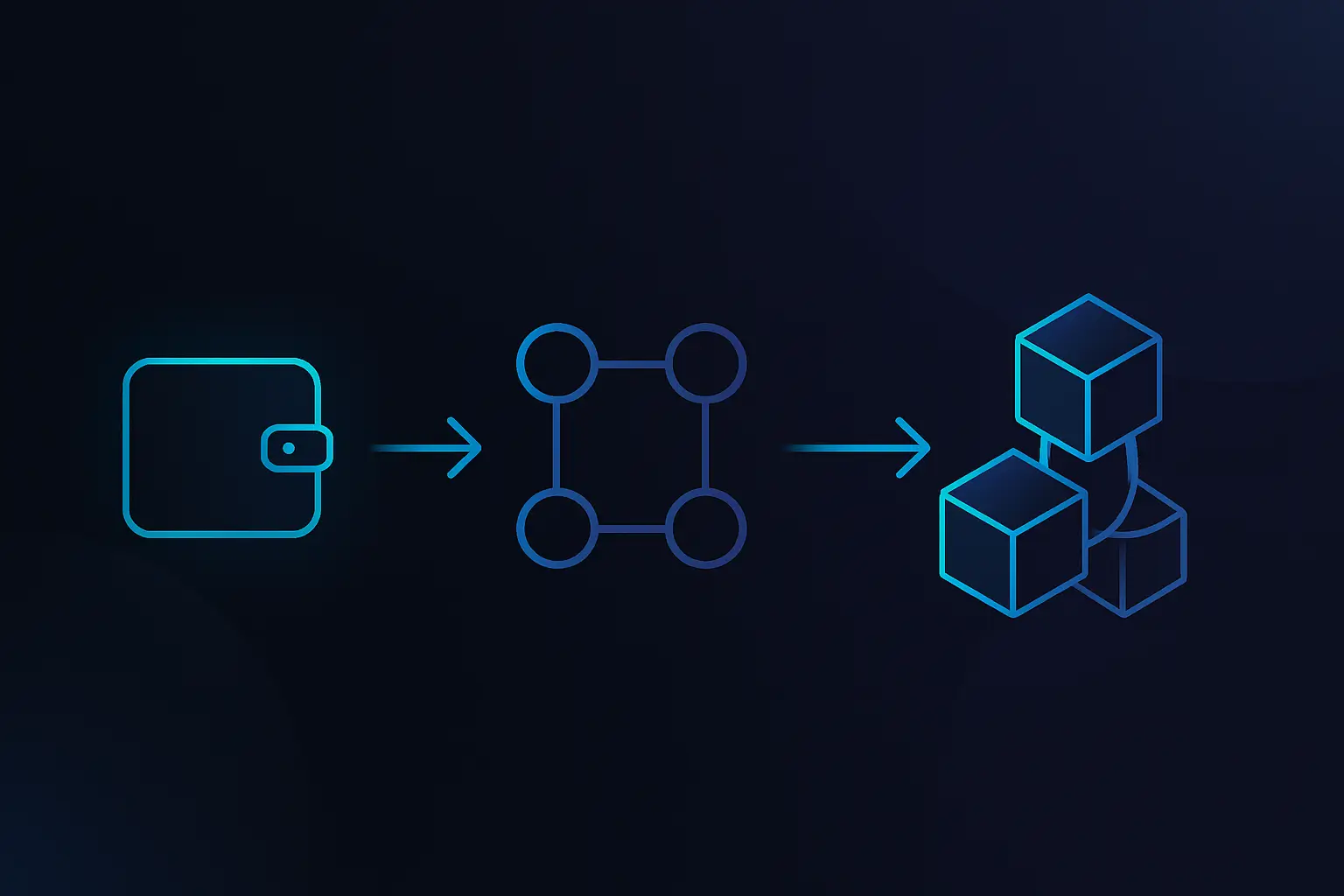
Whether you are on Ethereum, Solana, or another chain, a transaction follows a similar life cycle. It starts in your wallet, travels through the network, and ends up recorded in a block. Understanding this flow helps you make sense of pending transactions, fees, and why confirmations sometimes take longer than expected.
  • You create a transaction in your wallet, such as sending tokens, swapping on a DEX, or minting an NFT, and specify the network and recipient or contract.
  • Your wallet builds a transaction message and you sign it with your private key, proving it came from you without revealing your key.
  • The signed transaction is broadcast to the network, usually via a node run by your wallet provider or a public RPC endpoint.
  • Nodes receive the transaction, check basic rules (like correct signature and enough balance), and share it with other nodes in the network.
  • Validators pick from the pool of pending transactions and include them in a new block, usually prioritizing those with higher fees.
  • The proposed block is shared with other validators, who run the consensus mechanism to agree it is valid and should be added to the chain.
  • Once enough blocks have been built on top (or a finality mechanism triggers), your transaction is considered confirmed and hard to reverse.
Article illustration
Transaction Life Cycle
On some networks, confirmation is probabilistic: the more blocks are built on top of yours, the less likely it is to be reversed. Bitcoin and many proof-of-work style chains work this way, which is why people wait for several confirmations. Other networks use fast finality, where a group of validators explicitly signs off that a block is final within seconds. Many modern proof-of-stake and BFT-style chains aim for this, giving users quicker confidence that their transaction is locked in.

Types of Blockchain Networks (Public, Private, Layer 1, Layer 2)

Not all blockchain networks are open public systems like Ethereum. Some are private, some sit on top of others, and some are tuned for specific use cases. Two useful ways to classify them are by who can participate (public vs private, permissionless vs permissioned) and by where they sit in the stack (Layer 1 vs Layer 2 vs sidechains).

Key facts

Public permissionless
Anyone can run a node, submit transactions, and deploy smart contracts; examples include Ethereum, Solana, and Bitcoin.
Public permissioned
The ledger is visible to everyone, but only approved entities can validate blocks or deploy certain apps.
Private / consortium
Access is restricted to a company or group of organizations; used for internal records, supply chains, or enterprise workflows.
Layer 1 (L1)
Base blockchain that provides security and consensus directly; Ethereum and Solana are L1 networks.
Layer 2 (L2)
Built on top of an L1 to increase scalability or lower fees, while ultimately settling and inheriting security from the base chain.
Sidechain
A separate blockchain that runs in parallel to a main chain, often bridged to it but with its own validators and security model.
Ethereum and Solana are public, permissionless Layer 1 networks that secure themselves directly through their validators. In contrast, Polygon PoS and Arbitrum are examples of networks that connect back to Ethereum for security or settlement. When you hear “L2 on Ethereum,” it usually means a network that scales Ethereum while still relying on it as the ultimate source of truth.

Ethereum vs Solana vs Other Major Networks
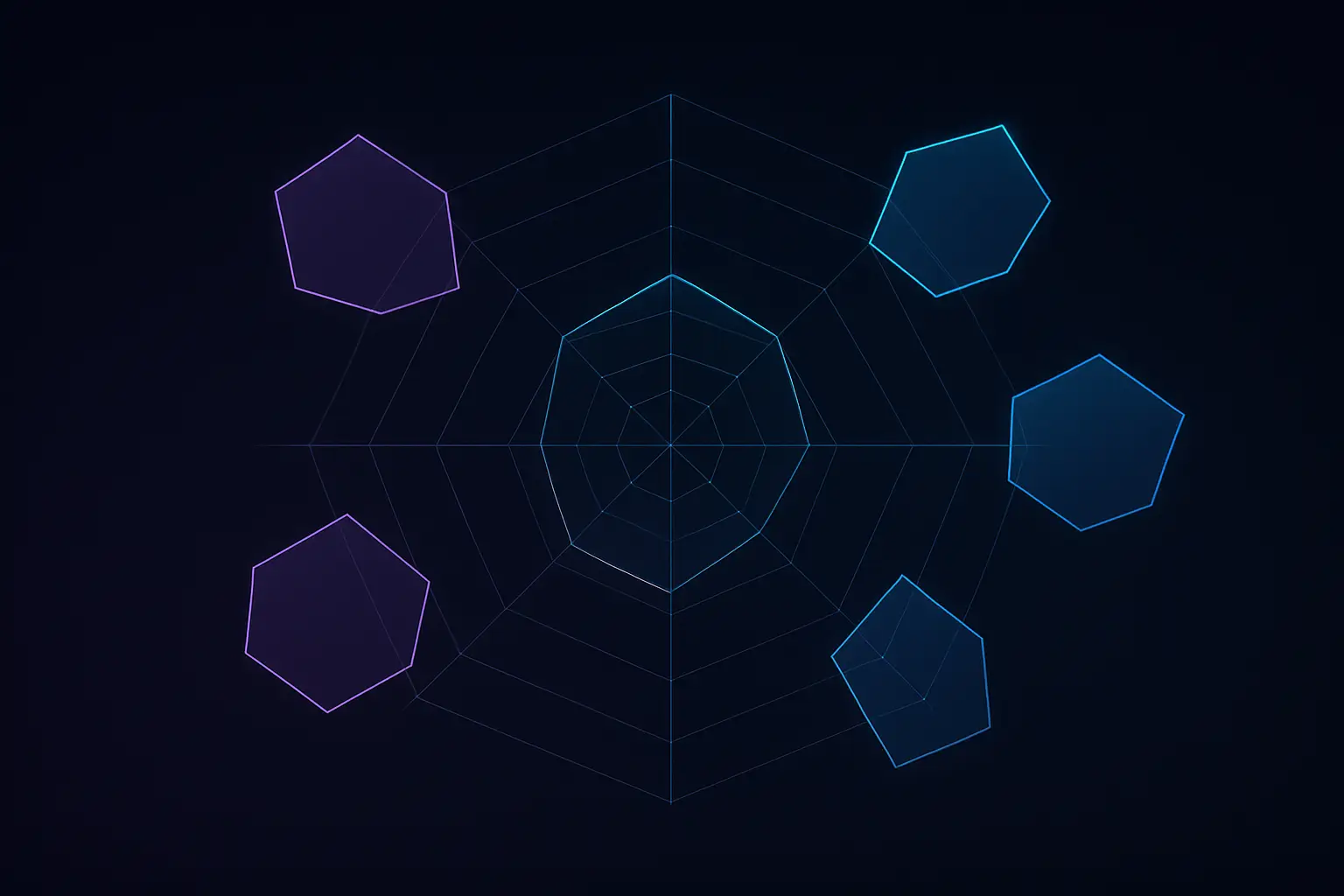
There is no single “best” blockchain network. Ethereum, Solana, BNB Chain, Polygon, and others exist because they make different trade-offs between decentralization, security, speed, and cost. Some prioritize maximum decentralization and a large validator set, even if that means higher fees and lower throughput. Others focus on high speed and low fees, accepting more centralization or newer, less battle-tested designs.
Article illustration
Different Network Trade-offs

Pro Tip:Instead of asking which network is “number one,” ask which network fits your use case and risk tolerance. For example, you might use Ethereum mainnet for high-value DeFi, Solana or Polygon for low-cost NFT mints or games, and an Ethereum L2 for everyday transactions.

What Can You Actually Do on a Blockchain Network?

Blockchain networks are not only about buying and selling coins on an exchange. They act as open platforms where money, code, and data can interact in new ways. Because the ledger is shared and programmable, developers can build applications that anyone can access with a wallet, without needing an account at a specific company.

Use Cases

  • Send and hold crypto: Store assets like ETH, SOL, and stablecoins in a wallet and transfer them globally without traditional banks.
  • Decentralized finance (DeFi): Lend, borrow, trade, and earn yield using smart contracts instead of centralized intermediaries.
  • NFTs and digital collectibles: Mint, buy, sell, and prove ownership of unique digital items such as art, tickets, or in-game assets.
  • Blockchain gaming: Play games where items and currencies exist on-chain, allowing trading and ownership outside the game itself.
  • Stablecoin payments: Use tokens pegged to fiat currencies for faster, cheaper cross-border payments and remittances.
  • DAOs and governance: Coordinate groups or projects using on-chain voting, treasuries, and transparent rules encoded in smart contracts.
  • Identity and credentials: Issue and verify on-chain badges, certificates, or reputation that can be reused across different apps.

Case Study / Story

Amira is a freelance web developer in Egypt who wants to launch a simple NFT ticketing app for small events. She keeps hearing about Ethereum, Solana, and Polygon but cannot tell whether they are coins, servers, or something else. She starts by reading about how Layer 1 networks like Ethereum and Solana differ in fees, speed, and decentralization. Then she discovers that many networks offer testnets, where she can deploy contracts and mint NFTs with fake tokens. Amira experiments on Ethereum’s Goerli testnet and a Polygon testnet, comparing the developer tools and wallet experience. After a week of testing, she chooses a low-fee EVM-compatible network connected to Ethereum for her first pilot, while planning to settle only the most important records on Ethereum mainnet. The prototype works well enough for a local concert, and she spends more time improving UX than worrying about servers. Her main lesson is that she does not need to master every chain. Understanding the basic network trade-offs and practicing on testnets is enough to make a confident, low-risk choice for her use case.
Article illustration
Choosing a First Network

How You Interact with a Blockchain Network (User, Developer, Validator)

You do not have to be a protocol engineer to take part in a blockchain network. People and organizations connect at different layers, from simple users with a phone wallet to validators running critical infrastructure. Understanding these roles helps you see where you might want to start now and what you could grow into later, if you decide to go deeper.
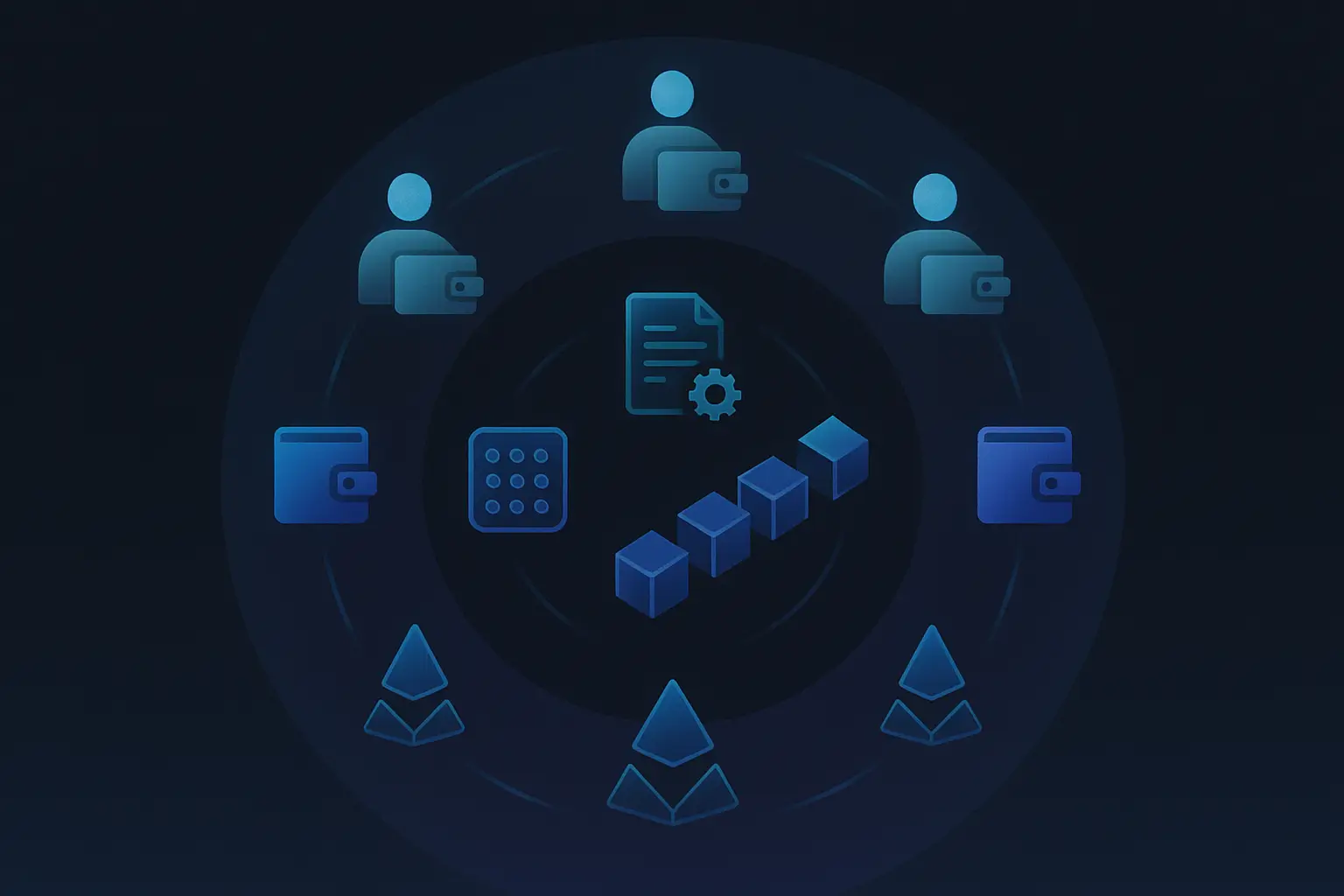
  • End user: Uses a wallet to send tokens, interact with dApps, trade, or mint NFTs, without running any infrastructure.
  • Developer: Writes smart contracts and frontends, integrates wallets, and chooses which network(s) to deploy on based on fees, tools, and audience.
  • Node operator: Runs a full node that stores the entire blockchain, helps relay transactions, and can provide reliable access for apps or organizations.
  • Validator / staker: Stakes tokens and participates in consensus to produce and validate blocks, earning rewards but also taking on technical and economic risk.
  • Governance participant: Uses tokens or delegated voting power to influence protocol upgrades, parameter changes, or treasury spending.
  • Liquidity provider: Deposits tokens into DeFi protocols or exchanges to enable trading and lending, earning fees but also facing smart contract and market risks.
Article illustration
Roles In The Network

Pro Tip:You can start as a simple user with a small amount of funds and a well-known wallet, without touching servers or code. If your curiosity grows, you can gradually explore smart contract tutorials, testnets, or even running a node—without ever rushing into high-risk setups.

Risks and Security Considerations of Blockchain Networks

Primary Risk Factors

Not every blockchain network is equally secure or battle-tested. Some have years of uptime and thousands of validators; others are new, lightly audited, or controlled by a small group. Because your assets and apps depend on the network’s security model, it is important to understand the main types of risks before moving large amounts of value.

Primary Risk Factors

51% attacks
If one party controls a majority of mining or stake, they may censor or reorder transactions, undermining trust in the chain.
Low validator set / centralization
When only a few entities run validators, they can coordinate to change rules, censor users, or shut the network down more easily.
Downtime and outages
Some networks have experienced periods when blocks stopped finalizing, making transfers and dApps unusable until the issue was fixed.
Network congestion
Heavy usage can cause delays and higher fees, especially on chains with limited throughput or during popular launches.
Protocol bugs
Bugs in the core protocol or client software can lead to forks, incorrect balances, or emergency upgrades.
Governance capture
If a small group controls governance tokens or decision-making, they can push changes that favor themselves over regular users.

Security Best Practices

Benefits and Limitations of Blockchain Networks

Pros

Censorship resistance makes it harder for single actors to block valid transactions or seize funds on mature public networks.
Transparency allows anyone to inspect the ledger, verify balances, and audit smart contract activity in real time.
Composability lets developers build on existing contracts and protocols like Lego bricks, accelerating innovation.
Global access means anyone with an internet connection and a wallet can participate, often without KYC for basic actions.
Programmability enables complex financial logic, gaming mechanics, and governance rules to run automatically on-chain.

Cons

User experience can be confusing, with seed phrases, gas fees, and complex transaction flows that intimidate newcomers.
Scalability limits on some networks lead to congestion and high fees during peak demand.
Transactions are usually irreversible, so mistakes like sending to the wrong address are hard or impossible to undo.
Network and smart contract bugs can cause unexpected losses or require emergency upgrades.
Running full nodes and validators can be resource-intensive, concentrating power among those with more capital and technical skills.

Getting Started Safely with Your First Blockchain Network

The safest way to learn how blockchain networks work is to start small and treat your first steps as experiments, not investments. You do not need large amounts of money to understand the basics. Stick to reputable networks and well-known wallets, and use testnets whenever possible so you can practice without risking real funds.
  • Choose a major, well-documented network such as Ethereum, a popular Ethereum Layer 2, or Solana as your first environment.
  • Install a reputable wallet (browser extension or mobile) that supports your chosen network and follow its official setup guide.
  • Write down your seed phrase offline, store it securely, and never share it with anyone or type it into unknown websites.
  • Acquire a very small amount of funds through a trusted exchange or faucet, just enough to cover basic test transactions.
  • Try simple actions like sending a tiny transfer to another wallet you control or doing a small swap on a well-known dApp.
  • If available, explore the network’s testnet to practice deploying contracts or interacting with more complex apps using free test tokens.
Never share your seed phrase or private keys, even with people claiming to offer support. At the beginning, avoid unfamiliar networks or cross-chain bridges until you are comfortable with basic on-chain actions.

Blockchain Network FAQ

Putting It All Together

May Be Suitable For

  • People who want to use crypto apps with more confidence
  • Developers choosing where to deploy their first dApp
  • Learners comparing Ethereum, Solana, and other networks
  • Long-term users who care about security and decentralization

May Not Be Suitable For

  • Traders only interested in short-term price moves
  • Readers looking for tax or legal advice
  • Anyone expecting guaranteed returns from specific networks
  • People who need deep protocol engineering details

A blockchain network is shared infrastructure where many independent nodes maintain a common ledger and run on-chain code. Names like Ethereum, Solana, and Polygon refer to different versions of this idea, each with its own rules, performance profile, and native token. Multiple networks exist because there is no perfect design: every chain balances security, decentralization, speed, and cost in its own way. As a user or builder, your job is not to find the one true winner, but to understand these trade-offs well enough to pick a network that fits your use case and risk level. If you keep this mental model in mind and practice on testnets first, you can explore new networks with curiosity instead of confusion or fear.

© 2025 Tokenoversity. All rights reserved.