A seed phrase is a short list of 12–24 simple words that acts as the master key to your crypto wallet. Anyone who has these words can restore your wallet on a new device and control all the funds inside. This makes your seed phrase both incredibly powerful and extremely sensitive. If you lose it, there is usually no support team or bank that can help you recover your coins. If someone else gets it, they can empty your wallet without your permission. In this guide, you will learn what a seed phrase is, how it works behind the scenes, and why it is different from passwords and PINs. You will also see how to store it safely, the biggest mistakes to avoid, and a simple checklist you can follow to protect your money.
Quick Takeaways: Seed Phrases in Plain Language
Summary
- A seed phrase is a 12–24 word recovery phrase that can fully restore your wallet and funds on any compatible device.
- Whoever knows your seed phrase effectively owns your crypto, so treat it like a master key, not like a normal password.
- Write your seed phrase down clearly on paper and store it offline in at least one safe, private location.
- Never take screenshots or store your seed phrase in cloud services, email, chats, or regular phone notes.
- No real support agent, exchange, or project will ever need your seed phrase—anyone asking for it is trying to steal from you.
- If you lose both your device and your seed phrase, your funds are gone permanently, so make at least one secure backup.
What Is a Seed Phrase? The Basics
- A seed phrase is a list of common words that humans can read and write more easily than long random numbers.
- It is generated automatically by your wallet software or hardware when you create a new wallet.
- It must be kept completely secret, because it can recreate all your private keys.
- The same seed phrase can restore your wallet on many compatible devices, so it is not tied to one phone or computer.
- You usually only see the seed phrase once during setup, so that is the moment to back it up carefully.

Under the Hood: How a Seed Phrase Works
- Your wallet first generates a strong random number using its internal randomness tools.
- This number is converted into a sequence of words chosen from a fixed list, creating your seed phrase.
- When you restore the wallet, the app turns these words back into the original number and then into multiple private keys.
- From each private key, the wallet calculates one or more public addresses where you can receive and hold crypto.
- All of this happens automatically inside the wallet software or hardware; you only interact with the simple list of words.
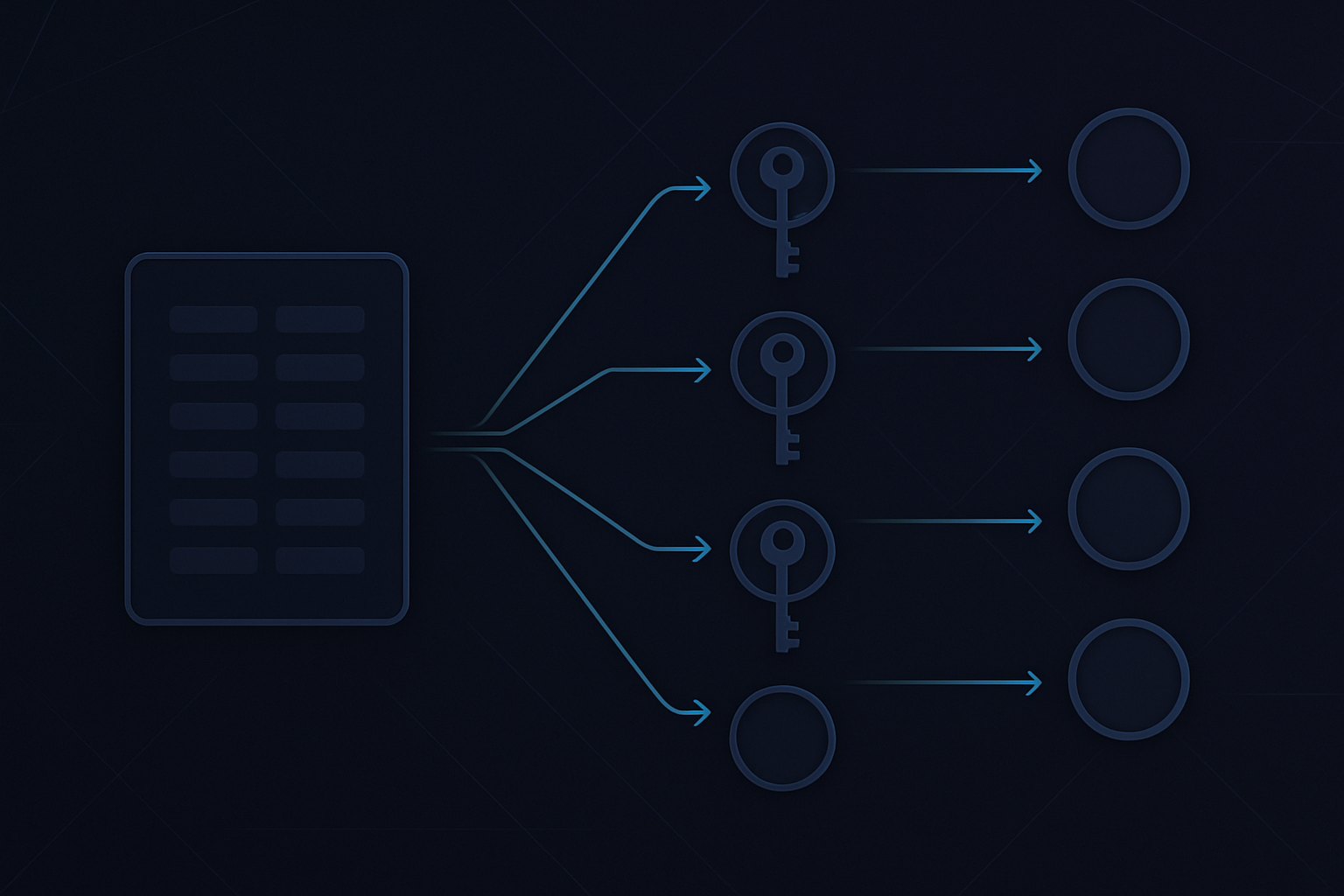
Pro Tip:You never need to calculate keys or addresses yourself—your wallet does all the math automatically. What matters is knowing that your seed phrase can recreate every account and address. This is why backing up those words once, correctly and securely, is far more important than backing up individual wallet files or addresses.
Why Your Seed Phrase Matters So Much
- You can restore your wallet and funds after losing or breaking your phone, as long as you still have your seed phrase.
- You can migrate from a mobile wallet to a hardware wallet, or between compatible apps, by importing the same phrase.
- A clearly documented seed phrase can be part of your inheritance plan so trusted family members can access funds if needed.
- Phishing sites and fake support agents often try to trick you into typing your seed phrase so they can steal everything.
- If an attacker gets your seed phrase and moves your crypto, the theft is usually permanent and cannot be reversed.

How to Store a Seed Phrase Safely
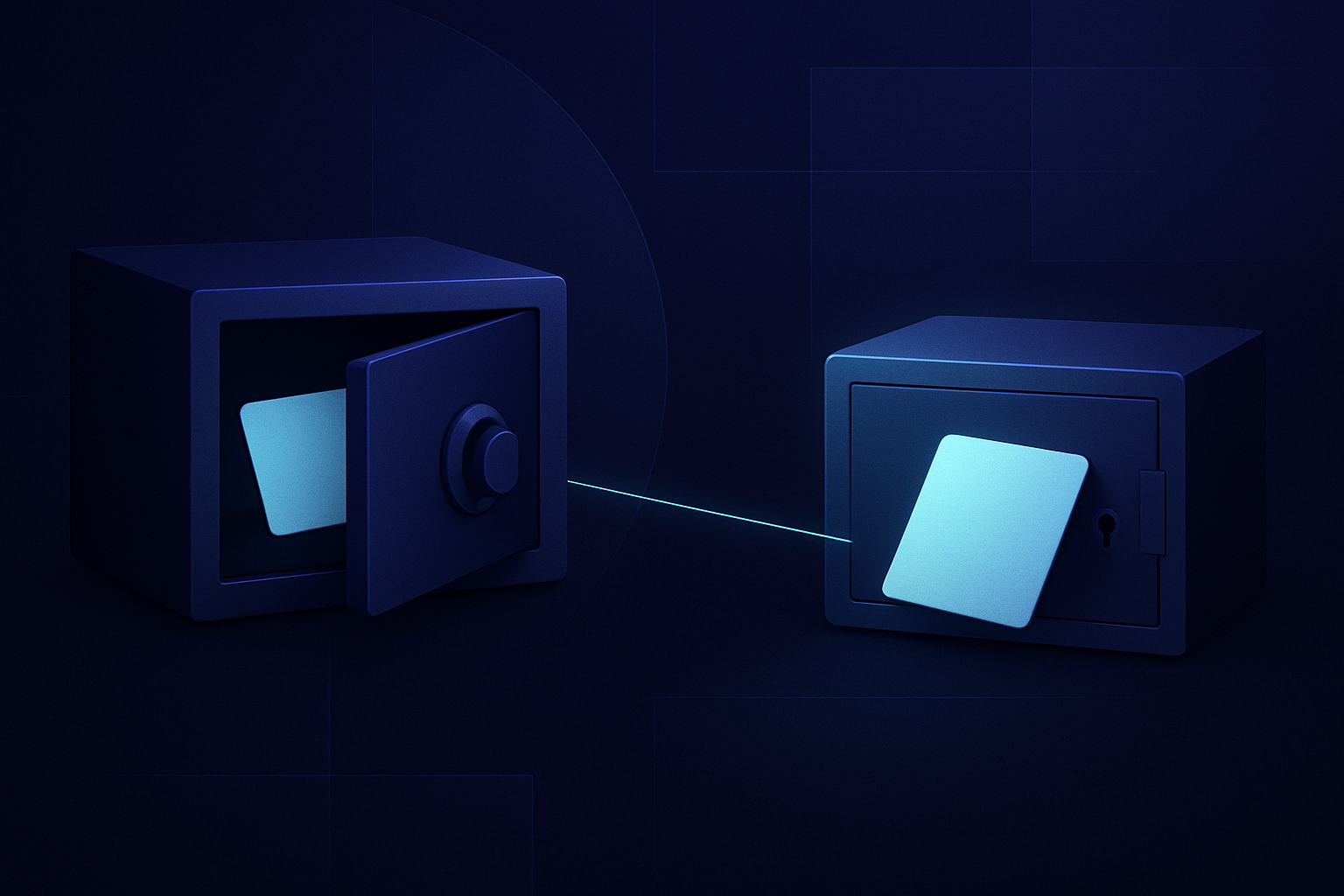
- Write your seed phrase neatly on paper, double-checking each word and its order against the wallet screen.
- Store the paper in a secure place such as a home safe, locked drawer, or other spot that is hidden and protected.
- Create at least one additional backup in a different physical location to protect against fire, flood, or theft in a single place.
- Consider using a fire- and water-resistant container, or a dedicated metal backup plate, for long-term durability.
- Every few months, quietly check that your backup is still readable and that you remember where each copy is stored.
- Keep the exact locations of your backups private and only share them with trusted people if you have a clear inheritance plan.
Pro Tip:If you hold larger amounts of crypto, consider upgrading from simple paper to a metal backup that can survive fire and water. Some people also keep copies in two different cities or countries. Only explore more complex setups, like splitting phrases, once you fully understand the basics and the risk of making your own scheme too confusing.
- Do not take screenshots of your seed phrase or let it appear in your phone’s photo gallery or cloud backup.
- Do not store the phrase in email, messaging apps, shared documents, or regular cloud notes, even if they seem private.
- Avoid typing the seed phrase into random websites or forms; only enter it directly into your trusted wallet app or hardware device.
- Do not rely on password managers for seed phrases unless you are an advanced user with a carefully planned setup and strong master password.
Common Seed Phrase Mistakes to Avoid
- Sharing the seed phrase with someone claiming to be support staff, a friend, or a “helper” who promises to fix a problem or double your money.
- Typing the phrase into random websites or fake wallet apps that ask you to “verify” or “sync” your wallet to receive an airdrop or prize.
- Saving the words in plain text files, screenshots, or cloud notes where email hacks, malware, or device theft can expose them.
- Taking a photo of the phrase during setup, which then gets automatically uploaded to cloud storage or synced across devices.
- Keeping only a single paper copy in one location, so a fire, flood, or burglary can destroy your only backup.
- Accidentally revealing the phrase during a screen share, video call, or in the background of a photo posted online.
Case Study / Story

Practical Situations Where Seed Phrases Save You
A seed phrase can feel abstract until something goes wrong. In practice, it shows its value in very concrete situations where your device, app, or circumstances change. Thinking through these scenarios in advance helps you see why a careful backup is worth the effort. It also makes it easier to stay calm and act correctly if one of these moments happens to you.
Use Cases
- Restoring your wallet after your phone is lost, stolen, or damaged, so you can continue using your funds on a new device.
- Upgrading from a software wallet to a hardware wallet by importing the same seed phrase into the new device.
- Recovering your coins after you accidentally delete the wallet app or reset your device to factory settings.
- Accessing your funds while traveling by installing the wallet on a temporary device, then wiping it when you are safely home.
- Consolidating multiple small wallets into one by moving funds from addresses that are all derived from the same seed phrase.
- Allowing a trusted family member or heir to access your crypto in case of illness or death, using a clearly documented and stored seed phrase.
Advanced Notes: Multiple Wallets, Passphrases, and Inheritance
- You can often use the same seed phrase in multiple compatible wallets or devices, but you must keep all of them physically secure.
- An optional passphrase (sometimes called a 25th word) creates a different set of wallets from the same seed phrase, adding privacy and security for advanced users.
- You might keep a small “daily spending” wallet on your phone and a larger “savings” wallet on a hardware device, each with its own seed phrase or passphrase.
- If you use a passphrase, losing or forgetting it can make those funds unrecoverable even if you still have the seed phrase.
- For inheritance, think carefully about who should eventually access your seed phrase and how they will find clear instructions without exposing it too early.
- Avoid inventing complex custom schemes unless you document them very clearly and fully understand the risks.
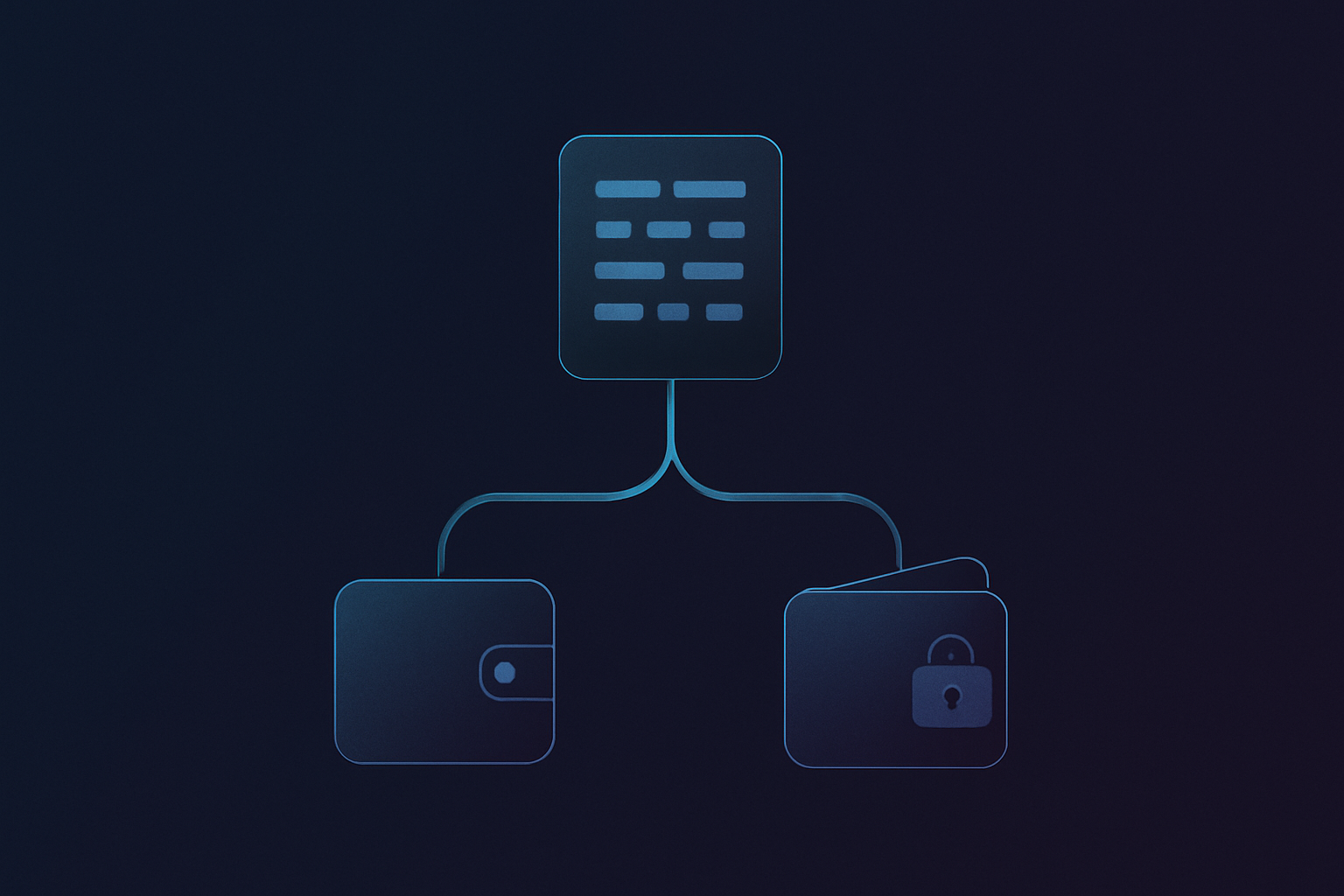
Pro Tip:You do not need multiple seed phrases, passphrases, or complex setups to start using crypto safely. For most beginners, one well-protected seed phrase and a simple wallet are enough. You can always add advanced layers later, once your amounts grow and your understanding deepens.
Risks and Security Threats Around Seed Phrases
Primary Risk Factors
When it comes to seed phrase security, almost every problem falls into two categories. Either someone else manages to copy your phrase, or you lose access to it yourself. Understanding the most common threats in each category helps you design simple defenses. The table below maps out key risks and how they can affect your wallet.
Primary Risk Factors
Security Best Practices
- Simple habits—offline storage, never sharing your seed phrase, and double-checking your backup—eliminate most real-world threats.
Seed Phrase vs. Other Wallet Security Concepts

Seed Phrase FAQ
Final Thoughts: Treat Your Seed Phrase Like a Treasure
May Be Suitable For
- People setting up their first self-custodial wallet and wanting clear safety steps
- Crypto users who currently rely on exchanges and want to understand backups
- Anyone who has a seed phrase written down but is unsure if it is stored securely
May Not Be Suitable For
- Users looking for deep cryptography or protocol-level technical details
- Organizations needing formal custody procedures and multi-signature policies
- People who only use custodial exchanges and never plan to hold their own keys
Your seed phrase is the master key to your crypto: it can recreate your entire wallet on any compatible device, and whoever holds it effectively owns your funds. No exchange, project team, or support desk can undo a stolen seed phrase or restore a lost one. To protect yourself, keep your phrase offline, in at least one or two secure physical locations, and never type it into random websites or share it with anyone. Treat it with the same seriousness you would give to a safe full of cash or important legal documents. Before you move on, quickly audit your own setup. Ask yourself where your seed phrase is stored, who could realistically access it, and what would happen if your main device failed tonight. Small improvements you make today can prevent life-changing losses in the future.