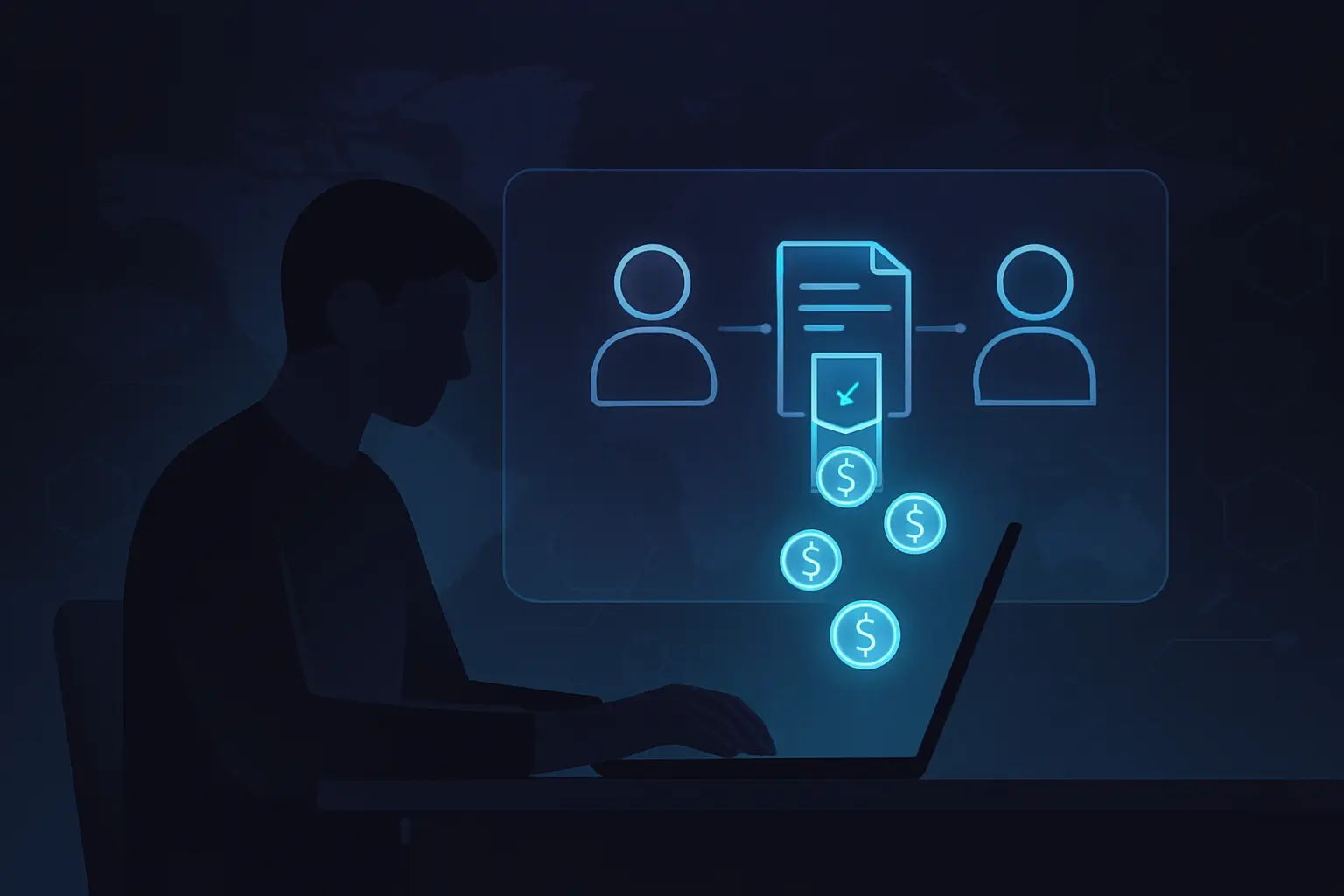
What Is a Smart Contract?

Beginners and intermediate users globally who want a clear, practical understanding of smart contracts and how they are used in crypto and beyond.

A smart contract is a small program stored on a blockchain that automatically runs when certain conditions are met. Instead of a person checking an agreement and pressing buttons, the code itself enforces the rules and moves digital assets. Smart contracts power many things you hear about in crypto, like DeFi protocols, NFT marketplaces, and on-chain games. They help strangers all over the world interact and trade without needing to trust a single company or middleman. In this guide, you will see what smart contracts are, how they work behind the scenes, and where they are used today. You will also learn about their risks, what they cannot do, and how to interact with them safely as a beginner.

Smart Contract Snapshot

Summary

  • Smart contracts are code on a blockchain that automatically runs when predefined conditions are met.
  • They can hold and move crypto, manage NFTs, and power DeFi apps like lending, trading, and staking.
  • Popular platforms for smart contracts include Ethereum, BNB Chain, Solana, Polygon, and many others.
  • Benefits include automation, global access, transparency, and reduced reliance on centralized intermediaries.
  • Key risks include coding bugs, hacks, permanent mistakes on-chain, and uncertain legal enforceability in some places.
  • Most users interact with smart contracts through wallets and dapps, not by writing or reading the code directly.

Core Definition: What Exactly Is a Smart Contract?
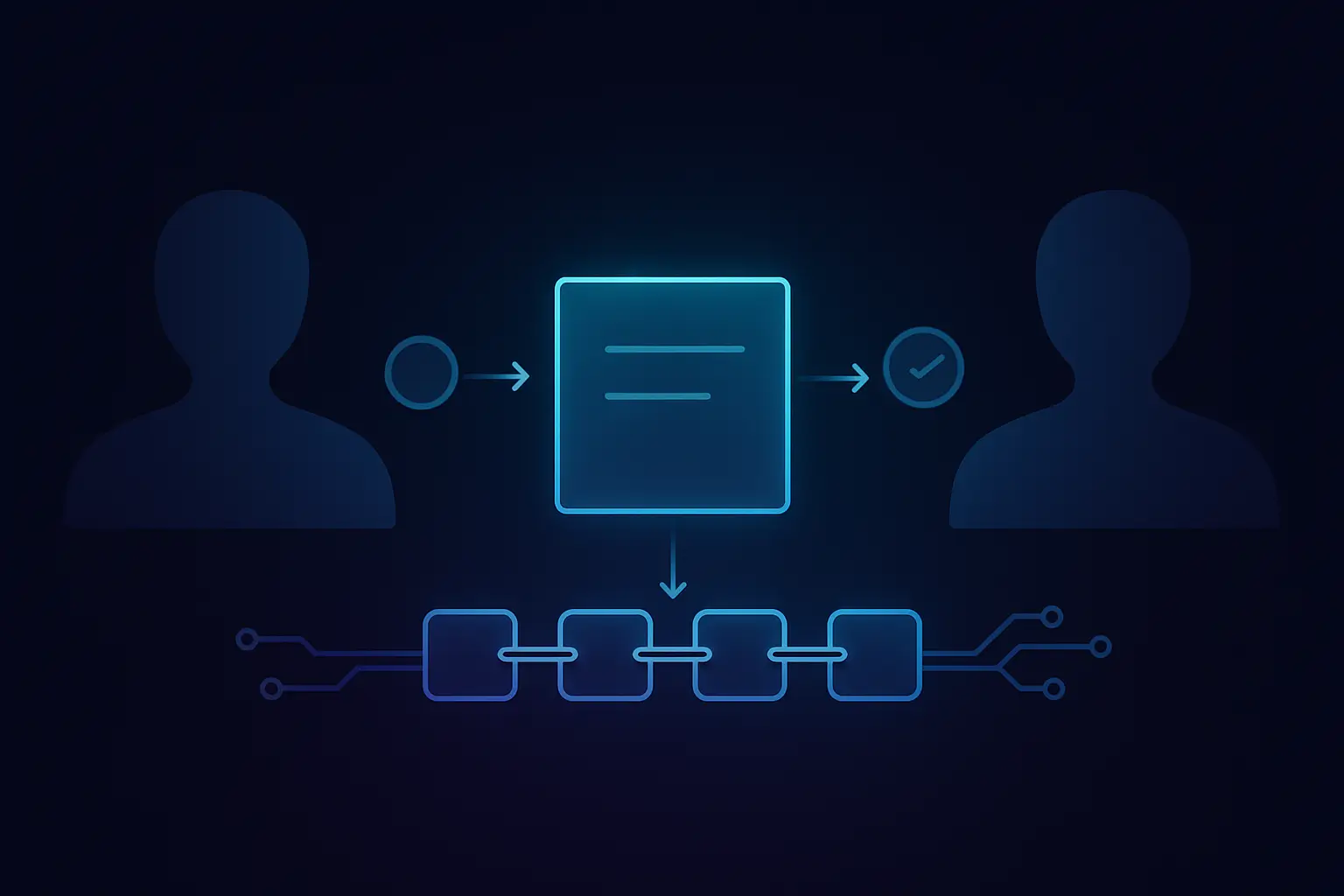
A smart contract is a piece of code stored on a blockchain that automatically executes actions when specific, predefined conditions are satisfied. Once deployed, it behaves like a tiny autonomous program that anyone can interact with, but no single person can secretly change. When you send a transaction to a smart contract, you are calling one of its functions and providing inputs, such as addresses, amounts, or choices. The blockchain network then runs the code on every node, checks that the rules are followed, and updates balances or data in a consistent way. Despite the name, a smart contract is not automatically a legal contract. It is a technical tool that can implement parts of an agreement, like payment conditions or access rules. In many real situations, a traditional written agreement still exists, and the smart contract is simply the enforcement mechanism for some of its terms.
Article illustration
Smart Contract Basics
  • Automatic execution of rules once conditions in the code are met, without manual approval.
  • Runs on a blockchain, so its logic and key data are transparent and publicly verifiable.
  • Typically immutable after deployment, meaning the code cannot easily be changed or undone.
  • Relies completely on correct coding and assumptions; if the logic is wrong, the blockchain will still follow it.
  • Can hold and control digital assets directly, making it a powerful building block for dapps and protocols.

Why Smart Contracts Matter
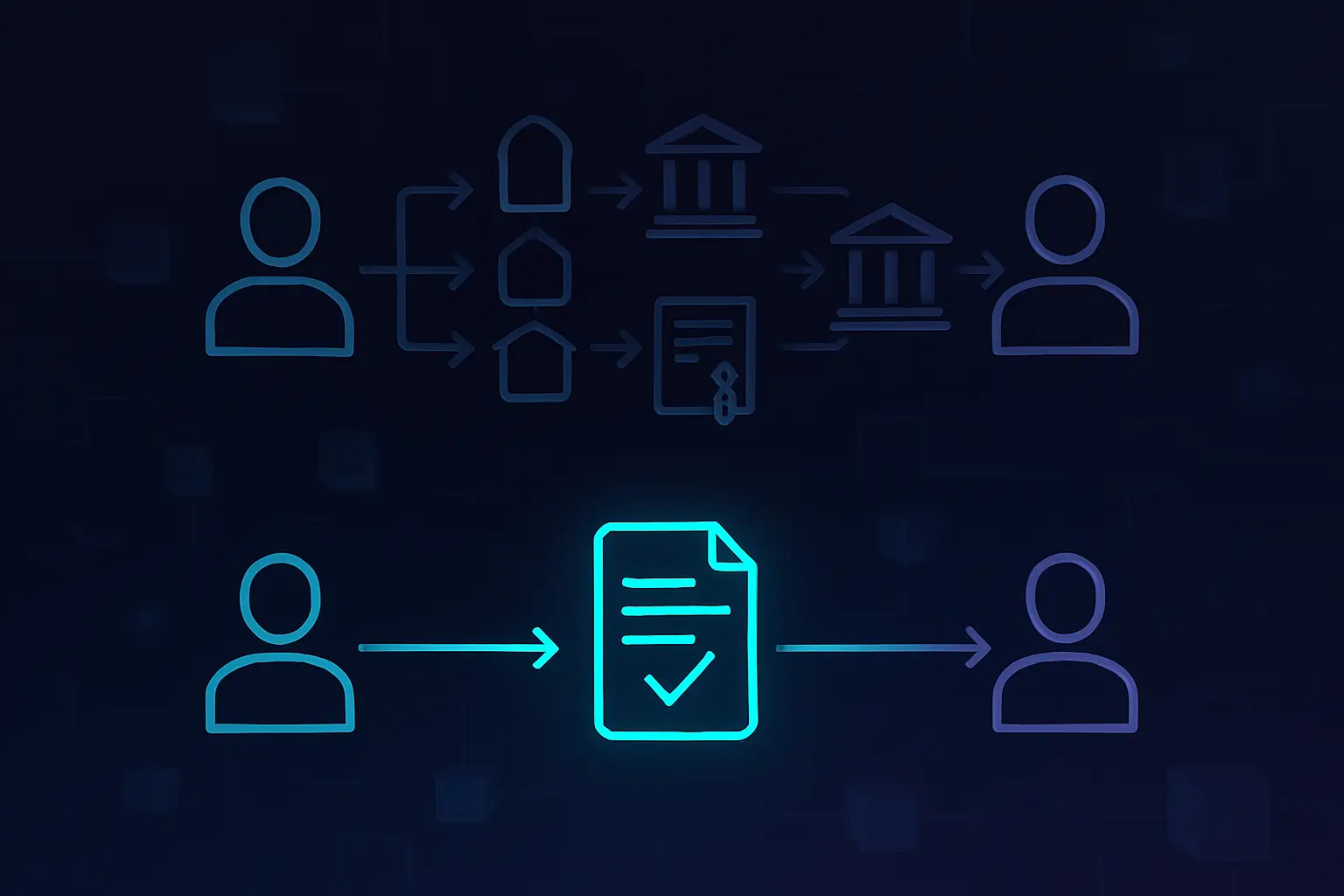
Traditional agreements often depend on banks, payment processors, or lawyers to check conditions and move money. With smart contracts, those checks are turned into code, so the blockchain itself enforces the rules and settles transactions 24/7, usually in minutes or seconds. This matters for people and businesses that work across borders, time zones, and currencies. A smart contract can act as a neutral escrow, release payment when shipping data confirms delivery, or distribute rewards to thousands of users at once. By reducing the need to trust a single intermediary, smart contracts enable new models like DeFi lending pools, NFT royalties that pay creators automatically, and transparent supply-chain tracking. At the same time, they can lower costs and open access to users who might be excluded from traditional financial systems.
Article illustration
Why They Matter

Pro Tip:In crypto, people say smart contracts are trustless, but that does not mean risk-free. You are still trusting the code, the developers who wrote it, and the blockchain network that runs it. Always remember: removing human middlemen replaces some risks with new technical ones, so you should still research carefully and start small.

How Smart Contracts Work Under the Hood

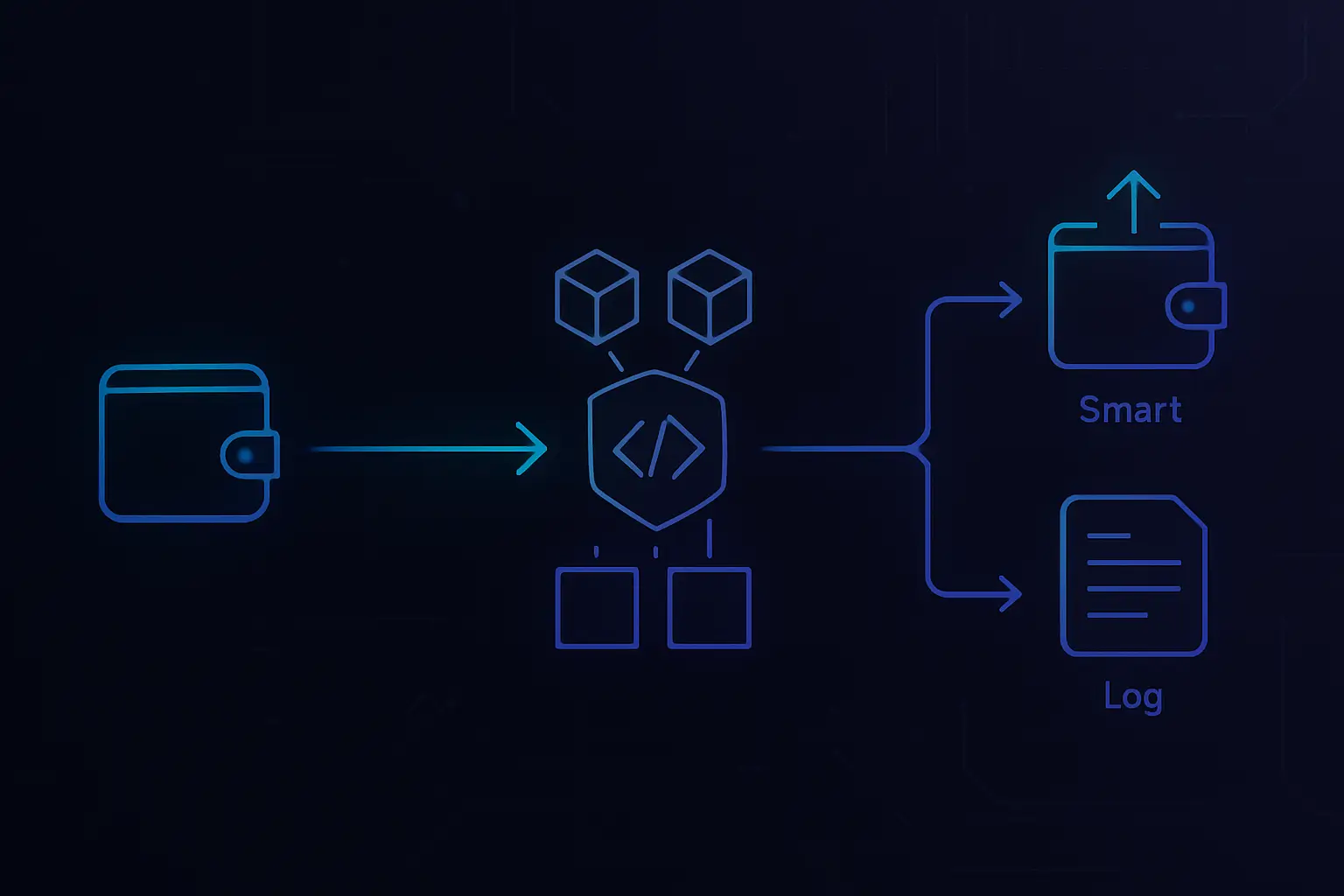
Underneath the friendly dapp interface, a smart contract follows a predictable life cycle. Developers write code, deploy it to the blockchain, and then users interact with it through transactions. You do not need to understand every technical detail to use smart contracts safely. But knowing the main stages helps you see where costs, delays, and risks can appear.
  • Developers write the smart contract code in a language like Solidity or Rust and test it on local or test networks.
  • They deploy the compiled contract to a blockchain, which creates a unique contract address and stores the code on-chain.
  • The contract may be funded with crypto or tokens so it can hold collateral, pay rewards, or manage pooled assets.
  • Users (or other contracts) send transactions that call specific functions, passing inputs such as amounts, addresses, or choices.
  • Nodes on the network execute the code, update the contract’s state (its stored data), and emit events or logs for apps to read.
  • The entire interaction, including inputs and outputs, becomes part of the blockchain’s permanent transaction history.
Article illustration
Execution Flow
Every time a smart contract runs, it consumes computing resources on the network. To prevent spam and reward validators, users pay gas fees, which are small amounts of crypto charged for each operation the contract performs. Gas fees depend on how complex the contract is and how busy the network is at that moment. Simple transfers cost less gas than complex DeFi trades or NFT mints with many checks. Validators or miners on the blockchain independently execute the same contract code and compare results. If they agree, the transaction is added to a block, ensuring that everyone applies the same logic and the contract’s state stays synchronized across all nodes.

Key Building Blocks of a Smart Contract

Inside a smart contract, the most important idea is state, which is the contract’s memory. State includes things like balances, ownership records, configuration settings, and any other data the contract needs to remember between transactions. Users interact with this state by calling functions, which are named actions defined in the code. Functions can change state, send tokens, or perform checks, often using conditions like if/then logic to decide what is allowed. When something important happens, the contract can emit events, which are logs that external apps and block explorers can listen to. Events make it easier for wallets, dashboards, and analytics tools to show you what the contract just did without reading all raw data from the blockchain.

Key facts

State
The contract’s stored data, such as balances, ownership, and settings; like the memory of a computer program that remembers past actions.
Function
A specific action that users or other contracts can call, such as deposit, withdraw, or vote; like buttons on a machine that trigger different behaviors.
Condition
If/then checks that decide what the contract will do based on inputs and current state; like rules in a spreadsheet formula that control the result.
Event
A log entry the contract emits when something notable happens; like a receipt or notification that external apps can easily track and display.

Where Did Smart Contracts Come From?

The idea of smart contracts is older than today’s blockchains. In the 1990s, cryptographer Nick Szabo described digital contracts that could automatically enforce rules using computer code. Bitcoin later introduced a limited scripting system that allowed simple conditions, like multi-signature wallets and time locks. But it was the launch of Ethereum in 2015 that made general-purpose smart contracts practical and widely accessible.

Key Points

  • 1990s: Nick Szabo proposes the concept of smart contracts as self-executing digital agreements.
  • 2009–2013: Bitcoin demonstrates programmable money with basic scripts for multisig, escrows, and time-locked transactions.
  • 2015: Ethereum launches with a Turing-complete virtual machine, enabling rich smart contracts and decentralized applications.
  • 2018–2020: DeFi protocols and decentralized exchanges explode in popularity, showing what composable smart contracts can do.
  • 2020–2021: NFTs and on-chain gaming bring smart contracts to artists, gamers, and mainstream audiences.
  • Today: Many chains, including BNB Chain, Solana, Polygon, and others, support smart contracts with different trade-offs in speed, cost, and security.

Real-World Use Cases of Smart Contracts

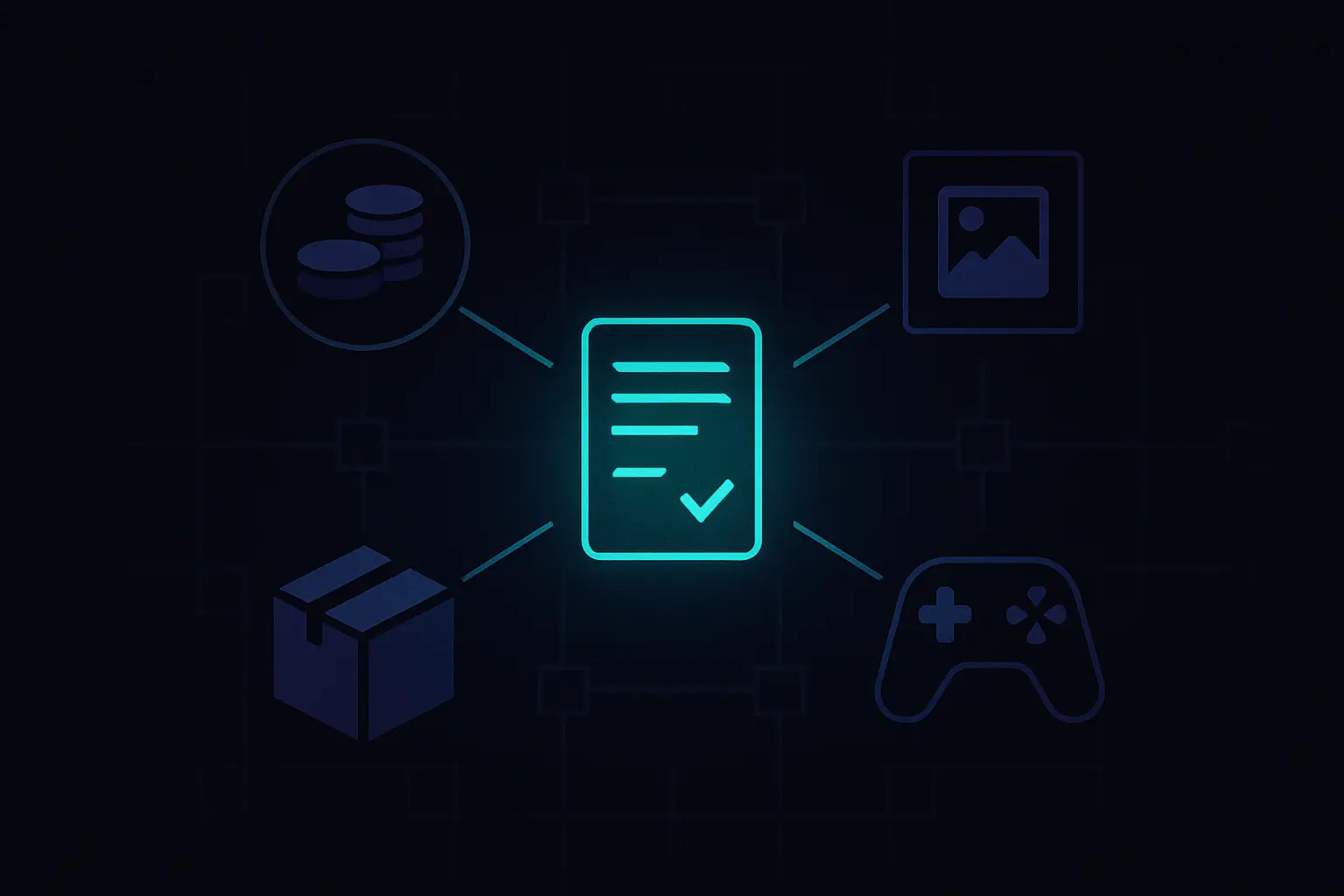
If you have used a DeFi app, traded an NFT, or voted in a DAO, you have probably interacted with smart contracts already. They run quietly in the background, enforcing rules and moving assets when you click buttons in a dapp. Seeing concrete use cases makes the idea less abstract. Below are some of the most common ways smart contracts are used in the real world today.

Use Cases

  • DeFi lending and borrowing platforms that pool user deposits and automatically calculate interest and collateral requirements.
  • Decentralized exchanges (DEXs) where smart contracts manage liquidity pools, pricing formulas, and trade settlement without a central order book.
  • NFT minting, trading, and royalty payments that send a share of each resale directly to the creator’s wallet.
  • Token vesting and payroll contracts that release tokens over time to team members, investors, or contributors based on predefined schedules.
  • DAO governance systems where token holders vote on proposals, and smart contracts automatically execute approved decisions.
  • Supply-chain tracking where each step of a product’s journey is recorded on-chain, improving transparency and auditability.
  • Blockchain-based games where in-game items and currencies are controlled by smart contracts, giving players verifiable ownership.
Article illustration
Smart Contract Use Cases

Case Study / Story

Amir is a freelance developer in Malaysia who often works with clients in Europe and the US. After one late payment too many, he starts looking for a way to make sure he gets paid on time without relying on expensive intermediaries. He hears about smart contracts and experiments with a simple escrow contract on a test network. The idea is straightforward: the client deposits funds into the contract, Amir delivers the code, and then the client confirms completion so the contract releases payment to Amir’s wallet. For a small project, they agree to try it instead of using only traditional invoicing. The client funds the contract, Amir can see the locked amount on-chain, and he finishes the work with more confidence. When the client clicks “approve” in the dapp, the contract automatically sends the funds to Amir. The experience is a success, but Amir also realizes the limits. If the contract had a bug or the client refused to approve, there would be no easy customer support or court to fix it. He learns that smart contracts are powerful tools, but they must be combined with clear communication and, for bigger deals, proper legal agreements.
Article illustration
Escrow In Action

Risks, Limits, and Security Concerns

Primary Risk Factors

Smart contracts remove some traditional risks, such as trusting a single company not to freeze your account or change the rules overnight. But they introduce new risks that are just as serious, especially for beginners. Because smart contracts are immutable, a bug in the code can lock or misdirect funds permanently. Many contracts also depend on external data feeds, called oracles, which can fail or be manipulated. On top of that, the legal status of some smart-contract-based arrangements is still evolving. In many places, it is not yet clear how courts will treat disputes that involve on-chain code and off-chain promises.

Primary Risk Factors

Coding bugs
Errors in the contract logic can allow attackers to drain funds or lock them forever, even if the project is well-intentioned.
Hacks and exploits
Attackers search for vulnerable contracts and use flash loans, reentrancy, or other tricks to steal large amounts of crypto quickly.
Permanent deployment
Once deployed, many contracts cannot be easily changed, so mistakes or bad parameters may be stuck on-chain.
Oracle failures
If a contract relies on external price or weather data, a faulty or hacked oracle can trigger wrong outcomes.
User error
Sending funds to the wrong contract, signing malicious transactions, or misunderstanding permissions can cause irreversible losses.
Unclear legal status
In some jurisdictions, it is uncertain how smart contracts interact with traditional contract law and consumer protection rules.

Security Best Practices

  • Favor audited and long-running protocols, start with small amounts, and double-check every transaction you sign. Remember that on most blockchains there is no support desk to undo a mistake.

Smart Contracts: Advantages and Drawbacks

Pros

Automation of payments and actions based on clear, pre-coded rules, reducing manual work and delays.
Global accessibility for anyone with an internet connection and a compatible wallet, regardless of location.
Transparency of code and key state on-chain, allowing independent verification and easier auditing.
Composability, where different smart contracts can plug into each other like Lego blocks to build complex systems.
24/7 availability, since the blockchain network does not close for weekends, holidays, or local business hours.

Cons

Technical complexity that makes it hard for non-developers to fully understand the risks and mechanics.
Irreversibility of most on-chain actions, so mistakes and hacks are often permanent and hard to recover from.
Security challenges, including bugs, exploits, and dependency on oracles and other external components.
Regulatory uncertainty in many countries about how smart-contract-based services fit into existing laws.
Limited ability to handle subjective disputes or nuanced real-world situations that do not fit simple code rules.

Smart Contracts vs. Traditional Contracts and Apps

Aspect Smart Contract Traditional Contract Centralized App Who controls it Runs on a decentralized blockchain; no single party can unilaterally change history. Enforced by people and institutions like courts, lawyers, and companies. Controlled by the company running the servers and database. Form and logic Code written in a programming language, executed by nodes. Human language text interpreted by lawyers and judges. Code on company servers, but users usually cannot see or verify it. Transparency Key code and state are publicly visible on-chain for anyone to inspect. Usually private between parties; not automatically transparent to outsiders. Internal logic and data are opaque; users see only the interface. Enforcement Automatic and rule-based; the blockchain executes outcomes deterministically. Relies on legal systems, negotiations, and sometimes manual enforcement. Enforced by company policies, support teams, and internal tools. Change and upgrades Hard or impossible to change once deployed, unless upgradability is built in. Can be amended by mutual agreement and proper legal procedures. Can be updated at any time by the company, often without user input.

Getting Started: Interacting With Smart Contracts Safely

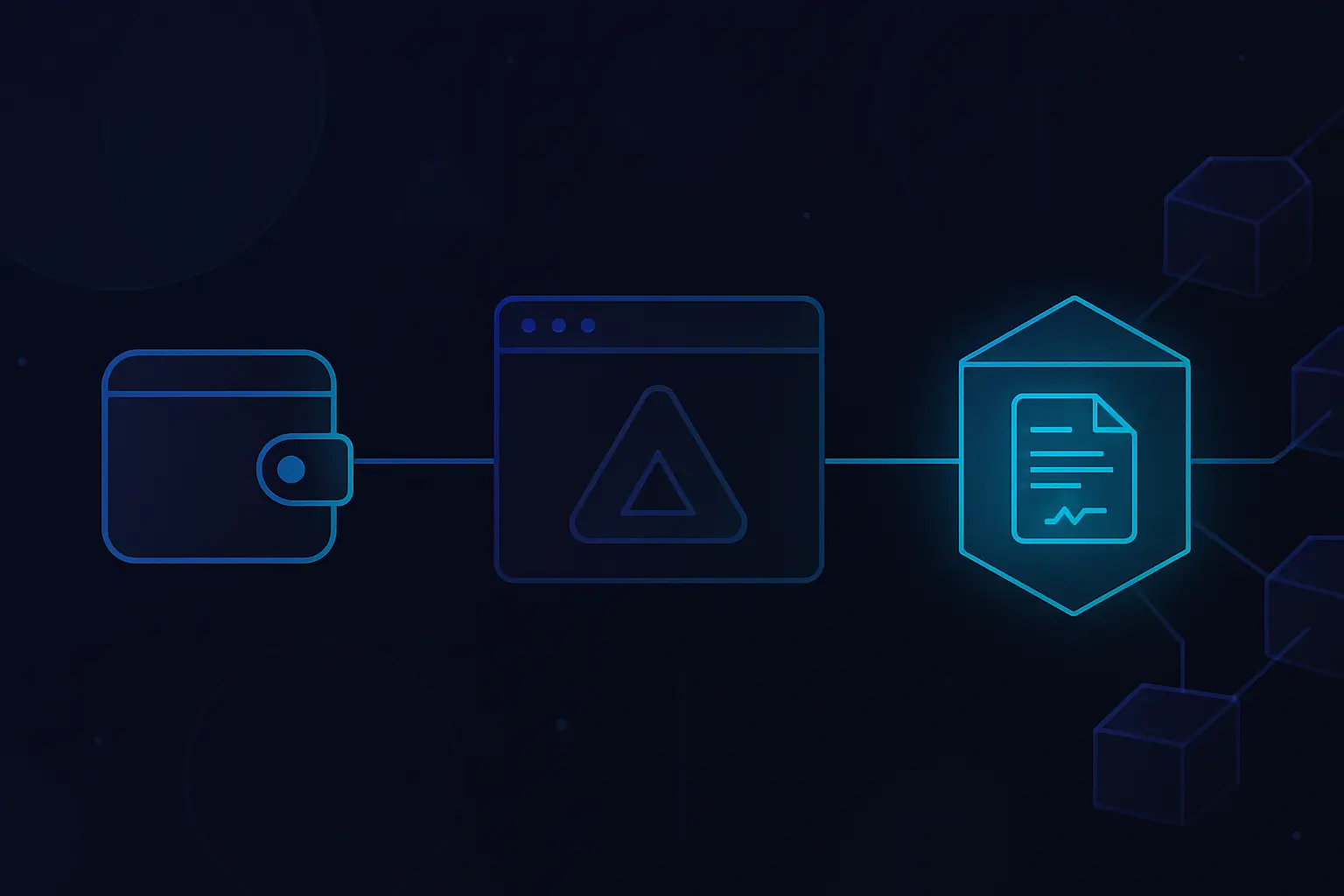
You do not need to be a programmer to use smart contracts. Most people interact with them through wallets like MetaMask and user-friendly dapps that hide the technical details. However, every time you click “approve” or “confirm” in your wallet, you are authorizing a contract to do something with your assets. A few simple habits can greatly reduce your risk while you explore DeFi, NFTs, and other on-chain apps.
  • Install a reputable wallet from the official website or app store, and securely back up your seed phrase offline.
  • Start on testnets or with very small amounts of real funds until you are comfortable with how transactions and gas fees work.
  • Access dapps only via official links or trusted aggregators, and double-check the URL to avoid phishing sites.
  • Verify the smart contract address from multiple sources, such as project docs, official announcements, and block explorers.
  • Read basic documentation or FAQs to understand what the contract does and what risks are involved before using it.
  • Carefully review the permissions you grant when approving tokens, and avoid giving unlimited access unless truly necessary.
Article illustration
Start Using Dapps

Pro Tip:Periodically review which dapps have token approvals and connected permissions to your wallet. Use token-approval checkers or your wallet’s interface to revoke access you no longer need, reducing the impact if a contract is later hacked.

Smart Contracts FAQ

Final Thoughts: How to Think About Smart Contracts

May Be Suitable For

  • People who use DeFi apps and NFT platforms regularly
  • Developers or tinkerers curious about on-chain automation
  • Entrepreneurs exploring global, programmable payments
  • Crypto users who want to understand what their wallet is signing

May Not Be Suitable For

  • Anyone expecting risk-free, guaranteed returns from smart contracts
  • Users uncomfortable managing their own keys and security
  • Situations that rely heavily on human judgment or complex legal nuance
  • People who need strong consumer protections and easy chargebacks

Smart contracts are one of the core innovations that make modern blockchains more than just payment networks. They turn code into autonomous agreements that can hold assets, enforce rules, and coordinate people across the world without a central operator. Used wisely, they enable DeFi, NFTs, DAOs, and many other experiments in open finance and digital ownership. Used carelessly, they can expose you to bugs, hacks, and irreversible mistakes. As you continue your crypto journey, treat smart contracts like powerful but unforgiving software. Learn how they work at a high level, start with simple use cases, and combine them with good security habits and, when needed, traditional legal protections.

© 2025 Tokenoversity. All rights reserved.