What Is Proof of Stake?

Beginners and intermediate crypto learners worldwide who want to understand how Proof of Stake works, why it matters, and how it affects their investment and network-participation decisions.

Every blockchain needs a way for thousands of computers to agree on which transactions are valid. This agreement process is called a consensus mechanism, and it is what keeps the ledger honest without a central authority. Proof of Stake (PoS) is one of the main consensus designs used today. Instead of burning electricity like Proof of Work mining, PoS asks participants to lock up coins as a kind of security deposit and rewards them for behaving honestly. Ethereum’s move to Proof of Stake in “the Merge” made PoS impossible to ignore. Many newer smart contract platforms, like Solana and Cardano, also rely on PoS or its variants. In this guide you will learn how PoS works in practice, how validators are chosen, where staking rewards come from, and what risks like slashing and lock-ups mean. You will also see how PoS compares to Proof of Work so you can make more informed decisions about staking and network participation.

Key Takeaways About Proof of Stake

Summary

  • Proof of Stake secures a blockchain by having participants lock coins as stake, which can be rewarded for honest behavior or partially lost for cheating or going offline.
  • Validators are chosen using a pseudo-random process that usually favors those with more stake, then they propose and attest to new blocks of transactions.
  • PoS is far more energy-efficient than Proof of Work because it relies on capital at risk, not continuous high-power hardware and electricity use.
  • Staking rewards typically come from new token issuance and transaction fees, and real returns depend on factors like total stake, validator performance, and network activity.
  • Main risks include slashing, downtime penalties, lock-up or unbonding periods where you cannot move your coins, and smart contract or custody risk when using third-party services.
  • You can participate at different levels, from running your own validator to simply delegating stake or using exchange and liquid staking services, each with its own trade-offs.

Proof of Stake in Everyday Language

Imagine a community club that needs night guards to protect its building. Instead of hiring guards with the biggest muscles, the club chooses people who are willing to leave a large deposit with the manager: if they do their job honestly, they get paid; if they help thieves, they lose part of their deposit. In a Proof of Stake blockchain, validators are like those guards. They lock up coins as a security deposit, then help check and add new transactions to the ledger. If they follow the rules, they earn rewards; if they cheat or disappear for too long, the protocol can take away some of their stake. Most everyday users do not want to run security themselves, so they act as delegators. They point their coins to a validator they trust, sharing in the rewards and also sharing some of the risk. This is different from a bank account paying interest: your coins are actively securing a network, and bad behavior by you or your chosen validator can be punished by the protocol.
  • Validators lock up coins as stake and run software that proposes and validates blocks of transactions.
  • Delegators keep control of their coins but assign their staking power to a validator or pool to help secure the network.
  • Honest participants earn staking rewards paid in the network’s native token, often compounding over time if restaked.
  • Dishonest or unreliable participants can face slashing or reduced rewards, losing part of their stake or missing income.

How Proof of Stake Actually Works

Every Proof of Stake blockchain has its own details, but they share a few core ideas. Participants lock coins as stake, the protocol chooses some of them at random to create and check blocks, and rewards or penalties are applied based on behavior. Instead of miners racing with hardware, PoS uses algorithms to pick validators in a way that is hard to predict or manipulate. This lets the network agree on a single chain of valid blocks while keeping energy use low and aligning incentives with honest participation.
  • Locking stake: A user or validator locks a certain amount of the network’s token in a special staking contract or account, often with unbonding or withdrawal rules.
  • Validator selection: For each block or time slot, the protocol uses a pseudo-random process, weighted by stake, to choose who proposes a block and who will attest or vote on it.
  • Proposing and validating: The chosen validator builds a new block of transactions, while other selected validators check it and sign off if it follows the rules.
  • Agreement and finalization: Once enough validators have attested, the block is added to the chain, and after some additional confirmations it reaches finality, meaning it is extremely unlikely to be reversed.
  • Rewards distribution: Honest validators and their delegators receive rewards, usually proportional to their stake and uptime, paid out at regular intervals or epochs.
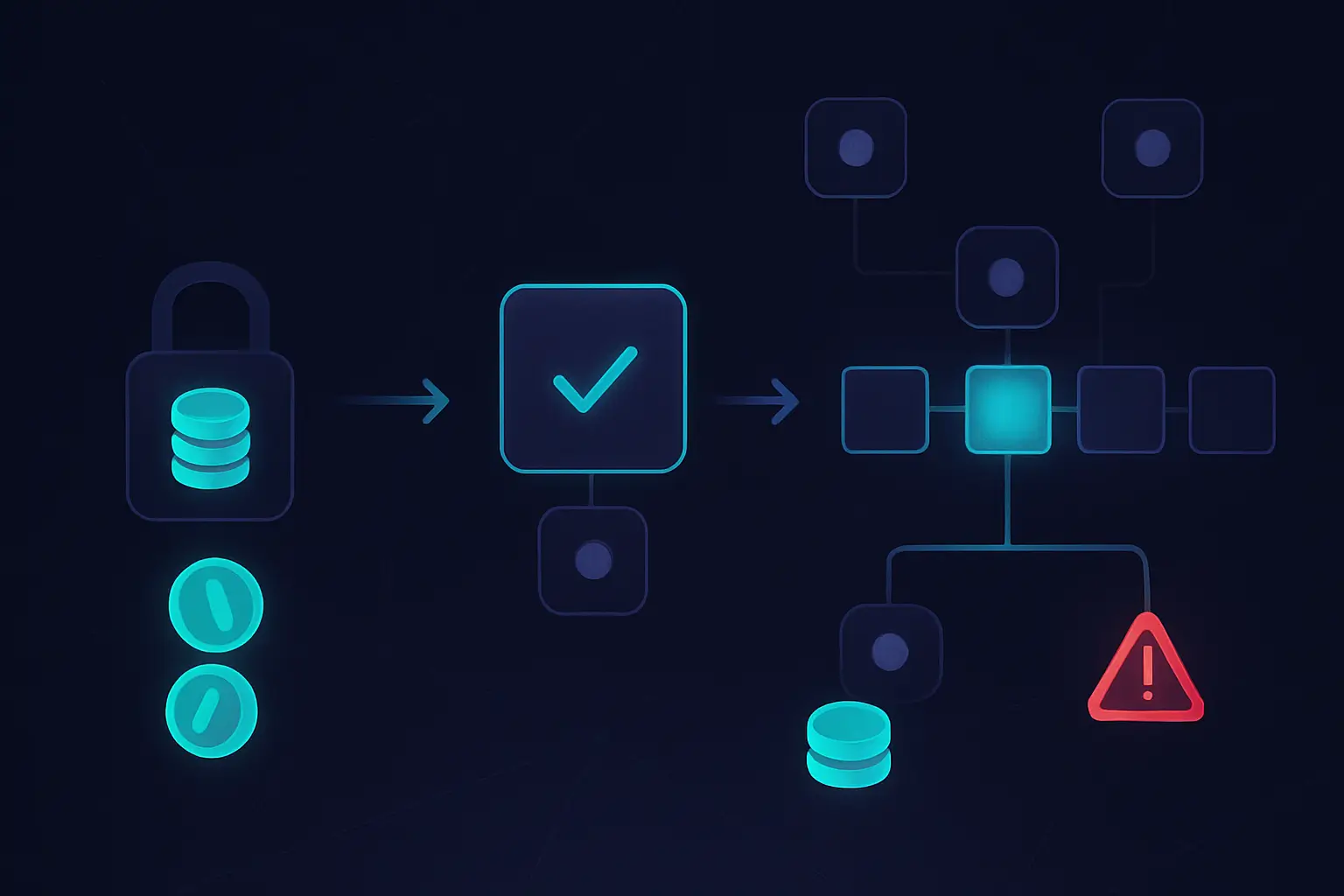
  • Slashing and penalties: If a validator double-signs, attacks the network, or is offline too often, the protocol can slash part of their stake or reduce their rewards.
Article illustration
How PoS Flows Work
In many PoS systems, the group of active validators at any time is called the validator set. The protocol may regularly rotate who is in this set based on who has staked and met technical requirements. An epoch is a chunk of time, often covering many blocks, used for organizing validator duties and paying out rewards. At the end of an epoch, the network may reshuffle assignments or update who is eligible. Finality is the point where a block is considered locked in and practically impossible to revert without a massive attack and loss of stake. Ethereum, Cardano, Solana and others all use these ideas but implement them with different timings, math, and security assumptions.

Roles in a Proof of Stake Network

A Proof of Stake network is more than just code; it is an ecosystem of different participants. At the center is the protocol itself, which defines the rules for staking, validator selection, rewards, and penalties. Validators run nodes that follow these rules, while delegators supply additional stake and share in the outcomes. Around them are infrastructure providers like staking pools, custodians, and exchanges that make participation easier for people who do not want to manage servers. You do not need to run your own validator to benefit from or support a PoS chain. Understanding each role helps you decide how directly you want to be involved and what responsibilities you are comfortable taking on.

Key facts

Validators
Run full nodes, lock their own or delegated stake, propose and attest to blocks, and earn rewards for high uptime and honest behavior while risking slashing for misbehavior.
Delegators
Hold tokens and assign their staking power to one or more validators or pools, sharing in rewards and some risks without operating hardware themselves.
Staking pool operators
Aggregate stake from many users, manage validator infrastructure at scale, charge a fee, and handle technical operations and monitoring on behalf of delegators.
Protocol developers
Design and maintain the core Proof of Stake protocol, including consensus rules, slashing conditions, and upgrades that affect security and economics.
Article illustration
Who Does What in PoS

Pro Tip:Even if you only act as a delegator, you still share risk with your chosen validator or pool. If they are slashed or frequently offline, your rewards can drop and in some networks your stake can be directly affected. Research validator performance, fees, and reputation instead of simply chasing the highest advertised yield.

What Proof of Stake Is Used For

Today, many of the most active smart contract platforms are secured by Proof of Stake. This includes networks where people trade tokens, mint NFTs, lend and borrow, and deploy decentralized applications. Because PoS affects how quickly blocks are produced and how many validators participate, it influences transaction fees, confirmation times, and overall network capacity. It also creates staking opportunities that let long-term holders earn rewards while contributing to security. When you use DeFi protocols, NFT marketplaces, or bridges on a PoS chain, you are indirectly relying on its staking system to keep your transactions safe and final.

Use Cases

  • Securing smart contract platforms like Ethereum, Solana, and Cardano, where validators ensure that complex on-chain programs execute correctly.
  • Enabling relatively low-fee, fast transactions by coordinating block production without the heavy energy costs of mining.
  • Powering DeFi protocols and NFT ecosystems that depend on reliable finality and predictable block times.
  • Providing staking income opportunities for long-term token holders who are willing to lock or delegate their coins.
  • Supporting on-chain governance where staked tokens can be used to vote on protocol upgrades and parameter changes.
  • Anchoring sidechains and Layer 2 networks that use PoS variants to inherit security from a base chain or coordinate their own validators.

Case Study: Ravi’s First Steps into Proof of Stake

Ravi is a software engineer in Bengaluru who has held some ETH and SOL for a while. He likes the idea of supporting the networks he uses, but the thought of running noisy, power-hungry mining rigs in his apartment never appealed to him. When he hears that Ethereum has moved to Proof of Stake, he starts reading about validators, delegators, and staking rewards. At first it sounds like free interest, but then he discovers concepts like slashing, lock-up periods, and the need for 24/7 uptime if you run your own validator. Ravi compares options: solo staking, joining a staking pool, or using his exchange’s staking service. He decides that, for now, running a validator is too much responsibility, so he chooses a well-reviewed non-custodial pool with a long performance history and transparent fees. Over the next year, Ravi earns modest but steady rewards while keeping control of his keys. He avoids flashy pools with very high advertised APR and learns to monitor validator performance dashboards. The experience teaches him to see staking as a security role in the network, not just a yield product, and he gradually shifts more stake to decentralized options as his confidence grows.
Article illustration
Ravi Tries Staking

Rewards, Inflation, and Economics of PoS

Staking rewards are not magic money; they usually come from two main sources. The first is new token issuance, where the protocol creates new coins and pays them to validators and delegators, causing inflation for the whole supply. The second source is transaction fees paid by users to get their transactions included in blocks. On some networks, these fees are a small bonus; on others, they become a major part of validator income as usage grows. Each PoS chain tries to balance security and inflation. Higher rewards can attract more stake and make attacks more expensive, but they also dilute non-stakers. As more people stake or network conditions change, the advertised APR naturally moves up or down.
  • Total amount staked: When more tokens are staked, the same reward pool is spread across more participants, often lowering individual APR.
  • Inflation schedule: Protocol rules for how many new tokens are issued per block or per year directly shape baseline staking yields.
  • Transaction volume and fees: Busy networks with high fees can boost rewards, while quiet periods may reduce them.
  • Validator performance: Uptime, correct behavior, and low error rates help maximize rewards for a validator and its delegators.
  • Protocol parameters: Settings like minimum stake, reward curves, and penalties are regularly tuned through governance and upgrades.

Pro Tip:Headline staking APRs are only part of the picture. Your real outcome depends on token price moves, how long your funds are locked, whether rewards are auto-compounded, and the chance of slashing or downtime. Always compare potential yield with the risks and your own time horizon, not just the biggest percentage on a website.

Risks and Security Considerations in Proof of Stake

Primary Risk Factors

Proof of Stake avoids the massive energy consumption of mining, but it introduces a different set of risks. Instead of hardware failures and electricity bills, you face slashing, smart contract bugs, custody issues, and governance problems. Because stake can concentrate in large validators, exchanges, or liquid staking protocols, PoS networks also worry about centralization of voting power. Long lock-up or unbonding periods can make it hard to react quickly if something goes wrong. Understanding these risks helps you choose safer staking methods and avoid treating staking as a no-brainer savings account.

Primary Risk Factors

Slashing
Loss of a portion of staked tokens if a validator double-signs blocks, tries to attack the network, or violates key protocol rules.
Downtime penalties
Reduced rewards or small losses when a validator is offline too often, leading to missed blocks and weaker security.
Smart contract bugs
Vulnerabilities in staking pools or liquid staking protocols that can be exploited, potentially draining user funds.
Exchange custody risk
Staking through centralized exchanges means they control your keys; hacks, insolvency, or freezes can block access to your coins.
Governance capture
Large holders or staking providers gaining outsized voting power, steering protocol changes in their favor.
Illiquidity and lock-up
Unbonding periods or fixed lock-ups can prevent you from moving or selling your tokens quickly during market stress.

Security Best Practices

  • Spread your stake across multiple validators or providers when possible, and avoid locking all your holdings for long periods. Before staking on any network, read its slashing and unbonding rules so surprises do not wipe out your gains.

Strengths and Weaknesses of Proof of Stake

Pros

Much more energy-efficient than Proof of Work, reducing environmental impact and operating costs.
Lower hardware and technical barriers let more people participate in securing the network as validators or delegators.
PoS designs can support faster block times and scalable variants suitable for high-throughput applications.
Stakers can earn direct on-chain rewards, aligning long-term holders with network security.
Capital at risk makes certain attacks expensive, as attackers must acquire and risk large amounts of the token.

Cons

Economic design is complex and hard for average users to fully understand, including inflation and reward dynamics.
Slashing and downtime penalties mean operational mistakes can directly cost validators and sometimes delegators.
Stake can centralize in large exchanges, custodians, or liquid staking protocols, weakening decentralization.
Initial token distributions and wealth inequality can translate into long-lasting concentration of governance power.
Reliance on long lock-up or unbonding periods can reduce flexibility and create liquidity risk for participants.

Proof of Stake vs. Proof of Work

Aspect Proof Of Stake Proof Of Work Primary resource used Capital locked as stake in the native token. Electricity and specialized mining hardware (ASICs/GPUs). Security assumption Attacker must acquire and risk a large share of the stake; misbehavior can be slashed. Attacker must control a large share of total hash power and pay ongoing energy costs. Energy use Low ongoing energy consumption; validators can run on modest hardware. High energy consumption by design, leading to large electricity footprints. Hardware requirements Standard servers or cloud instances; no special chips needed. Specialized mining rigs that can become obsolete over time. Participation barrier Lower technical and capital barrier for delegators; higher for solo validators depending on chain. High barrier due to hardware costs, access to cheap power, and industrial-scale competition. Typical networks Ethereum (post-Merge), Cardano, Solana, Polkadot, many newer L1s. Bitcoin, some older altcoins, and a few privacy or niche networks. Environmental impact Generally considered more environmentally friendly due to low energy use. Often criticized for environmental impact, depending on energy sources used.
Article illustration
PoS vs. PoW at a Glance

Ways to Participate in Proof of Stake

You can take part in a Proof of Stake network at several levels, from fully hands-off to deeply technical. The right choice depends on your capital, skills, and time. Running a validator gives you maximum control but also maximum responsibility and risk. Delegating through a wallet, using exchange staking, or trying liquid staking tokens can be simpler, but each adds extra trust or smart contract risk. Beginners often start with low amounts and the simplest method available, then move toward more direct participation as they learn.
  • Running your own validator: Highest control and direct rewards, but requires technical skills, reliable hardware, and careful monitoring to avoid slashing.
  • Delegating via native wallets: You keep your keys and simply choose one or more validators, making it relatively easy while still sharing some validator risk.
  • Staking through centralized exchanges: Very simple one-click experience and no node management, but you hand over custody and concentrate power in large platforms.
  • Using liquid staking tokens: You stake via a protocol and receive a tradable token representing your stake, gaining flexibility but adding smart contract and protocol governance risk.
  • Joining managed staking services: Professional operators run validators for you under non-custodial or semi-custodial models, often charging a fee for reduced operational hassle.

Article illustration
Levels of PoS Involvement

Pro Tip:Before you start staking, check how your local laws treat staking rewards and whether any reporting is required. Tax and regulatory treatment can vary widely by country and may affect which method makes sense for you.

Future of Proof of Stake and Evolving Designs

With Ethereum’s transition complete, Proof of Stake now secures a large share of total crypto value. Many new chains launch with PoS from day one, and older projects continue to explore migrations. Researchers and developers are working on designs that improve decentralization, such as reducing minimum stake, encouraging more home validators, and limiting the power of large pools and liquid staking providers. There is also active work on better slashing rules, faster finality, and cross-chain security. Beyond pure PoS, some teams are experimenting with hybrid models that mix PoS with Proof of Work, committee-based voting, or shared security across multiple chains. The long-term question is how to fund strong security in a world where block rewards may decline over time.
  • Long-term security budgets: How PoS chains will maintain strong incentives for validators as inflation drops and fee markets evolve.
  • Liquid staking centralization: Whether popular liquid staking tokens could concentrate voting power and create new systemic risks.
  • Regulatory attention: How policymakers will treat staking rewards, validator responsibilities, and large staking providers in different jurisdictions.
  • Interoperability and shared security: Ways PoS chains can share validator sets or stake to secure multiple networks and enable safer cross-chain activity.
  • Home staking and inclusivity: Efforts to keep validator requirements low enough that individuals can still participate directly from consumer hardware.

Proof of Stake FAQ

Bringing It All Together

May Be Suitable For

  • Long-term holders willing to lock or delegate some tokens for network security and rewards
  • Users comfortable learning basic staking mechanics and validator selection
  • People who value lower energy use and want to support PoS-based ecosystems
  • Developers and power users building on PoS smart contract platforms

May Not Be Suitable For

  • Traders who need full liquidity at all times and cannot tolerate lock-up periods
  • Users unwilling to research validators, providers, or protocol rules before staking
  • People with very low risk tolerance who cannot accept potential slashing or smart contract risk
  • Anyone in a jurisdiction where staking may face unclear or restrictive regulation

Proof of Stake is a major step in the evolution of blockchain consensus. By replacing energy-intensive mining with capital at risk, it opens network security to a wider range of participants while dramatically reducing environmental impact. At the same time, PoS introduces new complexities around economics, governance, and operational risk. Slashing, lock-ups, and stake centralization are real issues that deserve careful attention. If you treat staking as a security role rather than just yield farming, you can choose methods and risk levels that match your skills and time horizon. Start small, learn the specific rules of each network, and scale up only when you are confident in both the technology and your own understanding.

© 2025 Tokenoversity. All rights reserved.