The Core Coordination Problem
Imagine three roommates sharing expenses. A shared spreadsheet can track who paid what and who owes whom. This works only as long as one person is trusted to maintain the record.
But what if nobody wants to rely on a single "owner"? You still need one shared record that everyone agrees is the current truth, and you need a fair way to accept updates (new payments, corrections, refunds) without letting any one party quietly rewrite history.
The real problem is coordination without a trusted owner.
- Everyone needs to see the same version of the record.
- If participants can edit their own copies, disputes are inevitable.
- Without a shared source of truth, "what happened" becomes an argument.
- The goal is to avoid giving one party full control.
What a Blockchain Actually Is
A blockchain is a system for maintaining a shared history among participants who do not fully trust a single operator.
Instead of one database owner deciding what is "official", multiple participants keep copies and agree on which updates count.
The word chain is a helpful hint: new entries are added in order, building a timeline. Once an entry is accepted, later entries must build on top of it. Changing old entries later is intentionally difficult because everyone else has copies and will reject a rewrite that breaks the rules.
Key facts

How Changes Get Added
Once you understand what a blockchain is, the next question is how changes get added to this shared history in practice.
A blockchain works like a shared stream of proposed changes plus a process for accepting some of them into the shared history.
The basic flow looks like this:
- Someone creates a transaction (a request to add a change to the shared history).
- That request is broadcast to the network.
- Participants independently check that it follows the shared rules (for example: valid signature, enough balance, correct format).
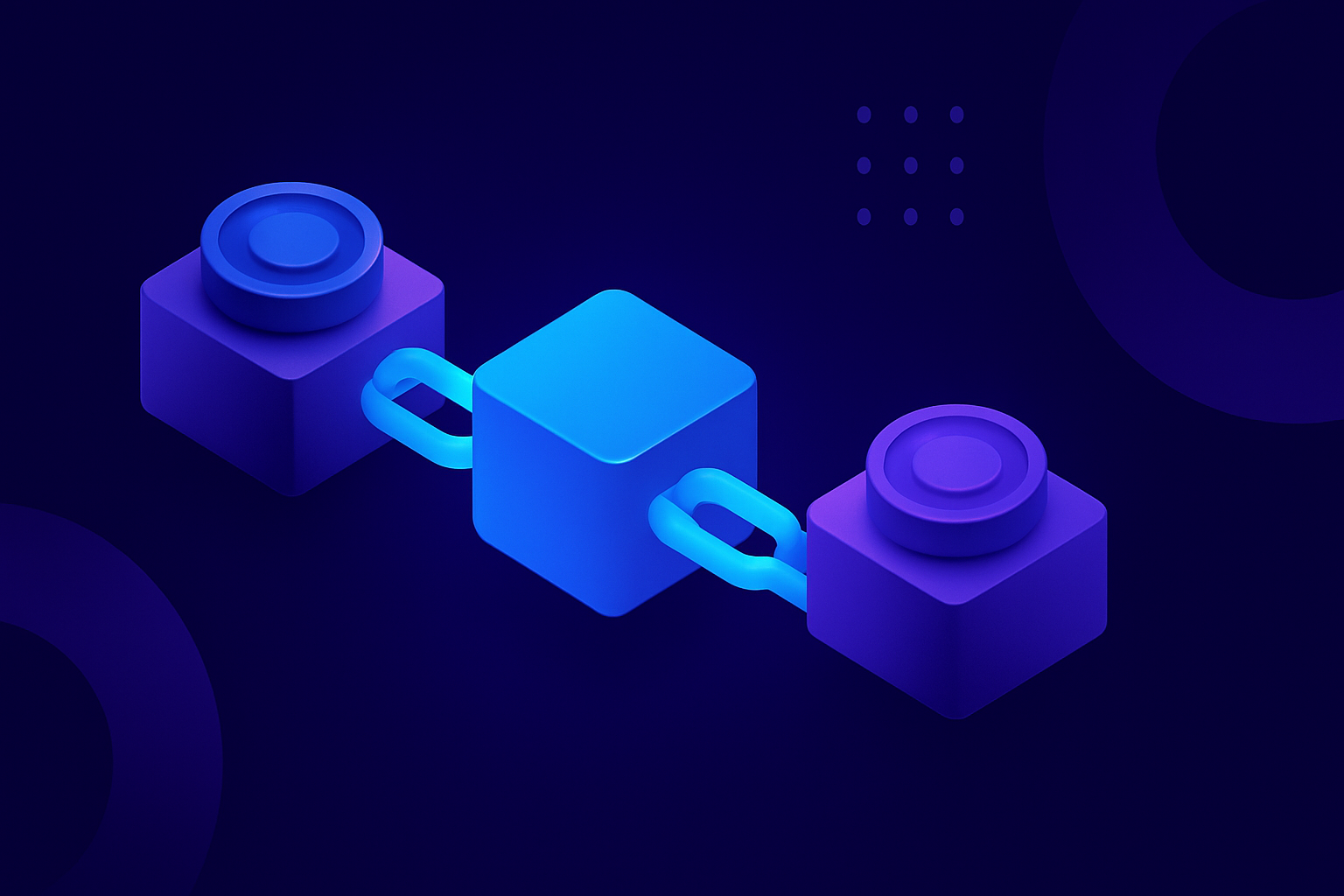
- Valid requests are grouped into a block.
- The new block is added to the shared history and distributed so everyone can update their copy.
What Blockchains Are Good At - And Bad At
Compared to a traditional database run by a single trusted operator, blockchains trade efficiency for shared control and verifiability.
That trade-off is useful in some situations and wasteful in others.
Pluses
Minuses
Pro Tip:Quick heuristic: if one trusted operator is acceptable, a normal database is usually better. Consider a blockchain only when you truly need shared control and independent verification between parties.
Where Blockchains Actually Make Sense
Blockchains tend to make sense when multiple independent actors need a shared record and you want to reduce reliance on any single administrator.
- Shared settlement or reconciliation between organizations that do not fully trust each other (for example, cross-company payments or asset registries).
- Multi-party coordination where participants need the same view of "who owns what" or "what happened".
- Situations where one trusted operator already exists and disputes are rare.
- Not a good fit for a single-company internal database where one admin is already trusted.
- Not a good fit for personal apps or high-speed systems where low latency is the main goal.
A Simple Mental Model to Remember
A blockchain can be understood as a shared notebook that many people keep copies of. New pages can be added, but only if the new page follows the rules everyone agreed on. Because everyone has a copy, one person cannot quietly swap out old pages without being caught.
- You need a shared record across people or organizations.
- You do not want one party to be the sole controller of that record.
- Most changes can be represented as new entries (not constant editing of old data).
- You accept extra cost and complexity in exchange for shared verification.
Calm Closing and TLDR Recap
May Be Suitable For
- Shared records between parties who do not fully trust a single operator
- Systems where independent verification and auditability matter
- Situations where control should not be a single point of failure
May Not Be Suitable For
- Single-organization apps where a normal database works
- High-throughput, low-latency systems where speed is the priority
- Data that must be frequently edited or deleted
TL;DR: A blockchain is a shared history that many participants can verify without trusting a single owner. It is useful when coordination and independent verification matter, and inefficient when a fast, centrally controlled database is enough.