Why changing fees feel confusing at first
Most digital services feel like they have stable prices. Subscriptions renew at the same amount each month, ride-hailing apps usually show a single price, and many apps hide infrastructure costs entirely so they seem free to use. On a blockchain, the fee is explicit and can change from one moment to the next, even when the action looks identical. It is normal to feel surprised or even frustrated when sending the same kind of transaction suddenly costs much more or much less, because this fee behavior is very different from what people are used to in traditional apps.
- Surprise that what other people are doing on the network can change how much your transaction costs right now.
- Feeling that a sudden jump in fees must mean something is wrong with the network or with your account.
- Confusion about why yesterday’s affordable action can feel expensive today, even though nothing about the action itself seems different.
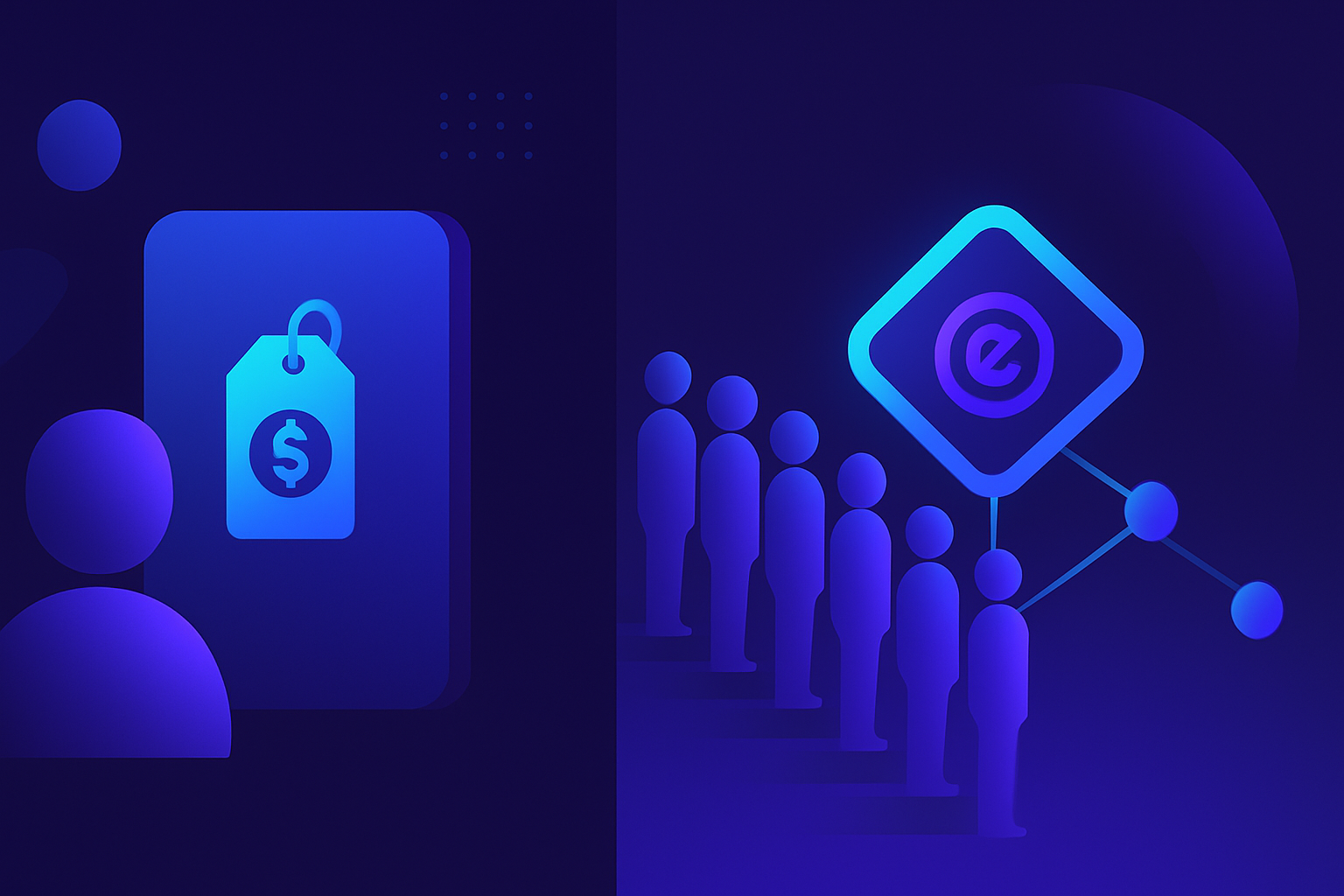
One key idea: fees respond to demand, not actions
On a blockchain, fees react mainly to competition for limited block space at a given time. When the network is quiet, the same kind of transaction can be processed for less, and when the network is crowded, that same transaction can cost more. The action itself does not change: the same wallet, the same type of transfer, the same steps. What changes is the level of competition for a shared, limited resource called block space. Because everyone is sharing that capacity, competition for space matters more for fees than the details of any single transaction.
- Fees on a blockchain do not stay fixed over time.
- The cost of a transaction depends on how many other transactions are waiting to be included.
- Two identical actions at different times can legitimately have different fees.
- This changing cost is expected behavior in a shared, capacity-limited network.
- Key takeaway: Fee changes are global signals, not personal judgments.

What actually changes over time
Each block on the chain can only hold a limited amount of data or actions. When more transactions are waiting than will fit in the next block, they form a queue. As that queue grows or shrinks, the level of competition for space in upcoming blocks changes, and fee levels move with that competition.
- Spikes in activity during popular events, news, or market moves can send many transactions to the network at once.
- When many transactions compete for limited space in upcoming blocks, fees tend to be pushed upward.
- When the queue is short and blocks are not full, there is less competition, so fees tend to drift downward.
- These natural ebbs and flows in activity are what cause fee pressure to rise and fall over time.
Key facts
Many pending transactions
Competition for limited block space increases, so fees are usually higher.
Few pending transactions
Competition is low, so fees are usually lower.
Fixed block capacity
Because each block can only hold so much, any surge in demand has a stronger effect on fees.
Why fees rise during busy times and fall during quiet times
When the next few blocks are crowded, there are more transactions than there are available slots. In that situation, transactions attach higher fees to express urgency and improve their chance of faster inclusion, so typical fees during that busy period rise. During quiet times, the opposite happens. There is enough space in upcoming blocks for most or all pending transactions, so there is less reason to attach a high fee. Fees tend to drift down until they match the lower level of competition. More competition → higher priority bids → higher fees. Less competition → lower urgency → lower fees. This back-and-forth movement is a natural result of supply and demand for limited block space, not a series of manual price changes.

Why fee changes do not require new rules
The basic rules that decide how transactions are ordered and charged are built into the blockchain software. They run the same way block after block without someone manually updating them every time fees move. What changes from moment to moment are the inputs to those rules: how many transactions are waiting, how full recent blocks have been, and how urgently people want to be included. The same rules run every block; only the inputs change. Fee changes are an output of the system, not an input. This behavior is part of the design, not a sign of constant rule changes behind the scenes.
Pro Tip:If fees go up or down during a normal day and there has been no major announced upgrade, it is usually just demand shifting. The network is built to adjust to load automatically, so moving fees are a sign that this mechanism is working. A temporary spike can be inconvenient, but it does not by itself mean that rules or policies were suddenly changed.
What fee changes do NOT mean
Common myths
Myth: Fees went up, so the network must be failing.
Myth: Fees went down, so there is a permanent discount from now on.
Myth: Someone in charge is constantly changing fee settings by hand.
Myth: If my fee is higher than yesterday, I am being treated differently.
What actually happens
Reality: Fees often rise because many users are competing for limited block space.
Reality: Fees often fall because fewer users are active at that moment.
Reality: Fee behavior mostly comes from built-in rules reacting to demand.
Reality: Most users face the same shared conditions; differences come from timing, not personal judgment.
A simple mental model to remember
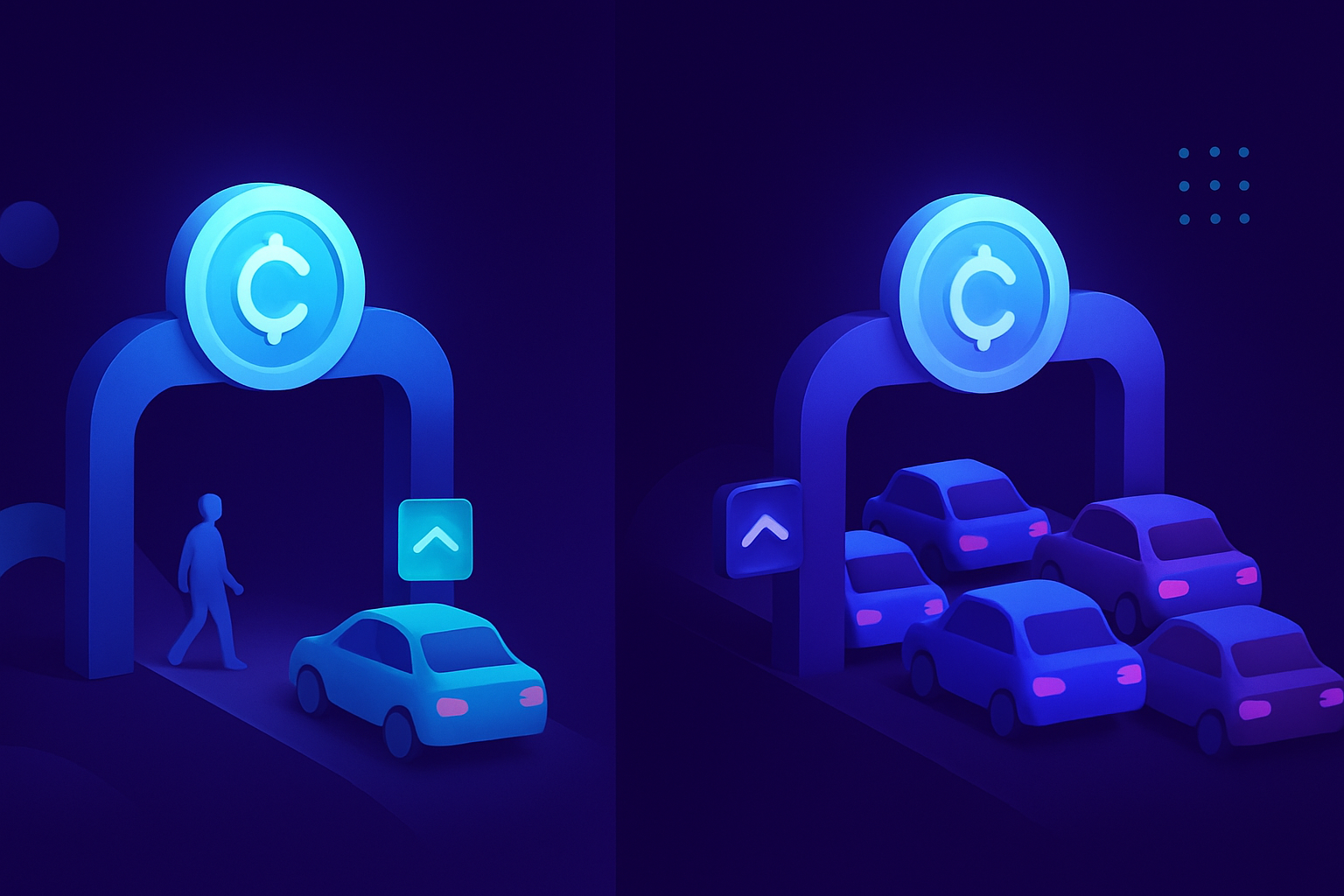
Imagine a popular event with one entrance that can only let in a certain number of people each minute. On a quiet afternoon, there is almost no line, and entry is simple and quick. On a busy evening, a long queue forms, and some people may choose to pay extra for a faster lane while others wait longer in the regular line. The event entrance is like block space, the crowd size is like demand on the network, and the extra payment or waiting time is like transaction fees. When it is crowded, everyone faces the same shared conditions, and the cost or wait reflects how many people are there, not who they are. Blockchain fees change for the same reason: the crowd has changed, even if your action has not.
Calm closing and TL;DR recap
Fee ups and downs on a blockchain are a normal part of sharing limited block space with many other users. As activity rises and falls, fees move with it, without anyone needing to constantly change the rules. Understanding this pattern can make fee changes feel less mysterious or alarming. When fees change, it usually means the system is responding to demand, not that it is failing.
TL;DR
- Blockchain fees are not fixed prices that stay the same over time.
- Fees change because many users share limited block space and compete to be included.
- Busy periods create more competition, which usually pushes fees higher.
- Quiet periods reduce competition, which usually lets fees fall.
- These fee movements happen automatically under the existing rules of the network.
- Fee changes are a sign that the system is responding to demand, not that it is breaking.