The confusion and user experience
You press "Send", everything looks correct - and then nothing happens. Many people first notice this topic when a transaction in their wallet or on a block explorer sits as “pending” for far longer than expected. The amounts, addresses, and other details looked correct, yet the status never seems to move to “confirmed” or “completed.” In other cases, a transaction suddenly shows as “failed” or “reverted” even though a very similar action worked earlier. The same kind of transfer, swap, or interaction might succeed one time and fail the next, which can feel random, unfair, or like something is secretly broken. This confusion is extremely common and does not automatically mean that funds are lost or that anyone made a mistake.
- Why did this transaction not go through when everything looked correct?
- How can a transaction fail if the address, amount, and other details were all right?
- Why is this transaction stuck as pending and never seems to finish or confirm?
- Why does the same kind of action sometimes work instantly and sometimes fail or get stuck?
A transaction as a proposal, not a guarantee
A helpful way to think about a blockchain transaction is as a proposal or request, not as an automatic change. When a transaction is created and signed, it is suggesting an update to a shared history that many participants rely on. This shared history is the blockchain’s record of who owns what and which actions have already happened. Before that record is updated, the network checks whether the proposed change still fits with the latest version of this shared state. A transaction can look perfectly fine when it is created, but by the time the network tries to apply it, conditions may have changed and the proposal can be rejected.

Key facts
Checks on the transaction itself
Is it correctly formed, signed by the right key, and following basic rule formats?
Checks against current blockchain state
Does the account still have enough balance, the right permissions, and a place in the expected order?
Important note
A transaction can pass the first kind of check but still fail the second once the live shared state has changed.
How timing and context affect a transaction
At any moment, many people around the world may be sending transactions at roughly the same time. The blockchain does not update continuously in one smooth motion; instead, it updates in steps as groups of transactions are added to the shared history. Within each step, transactions are applied in some order to the latest known state. Each one slightly changes balances, permissions, or other pieces of information. By the time a particular transaction is finally checked, earlier ones may already have moved funds, changed an approval, or used up something it was expecting to rely on, which can cause it to fail even though it looked fine when created.
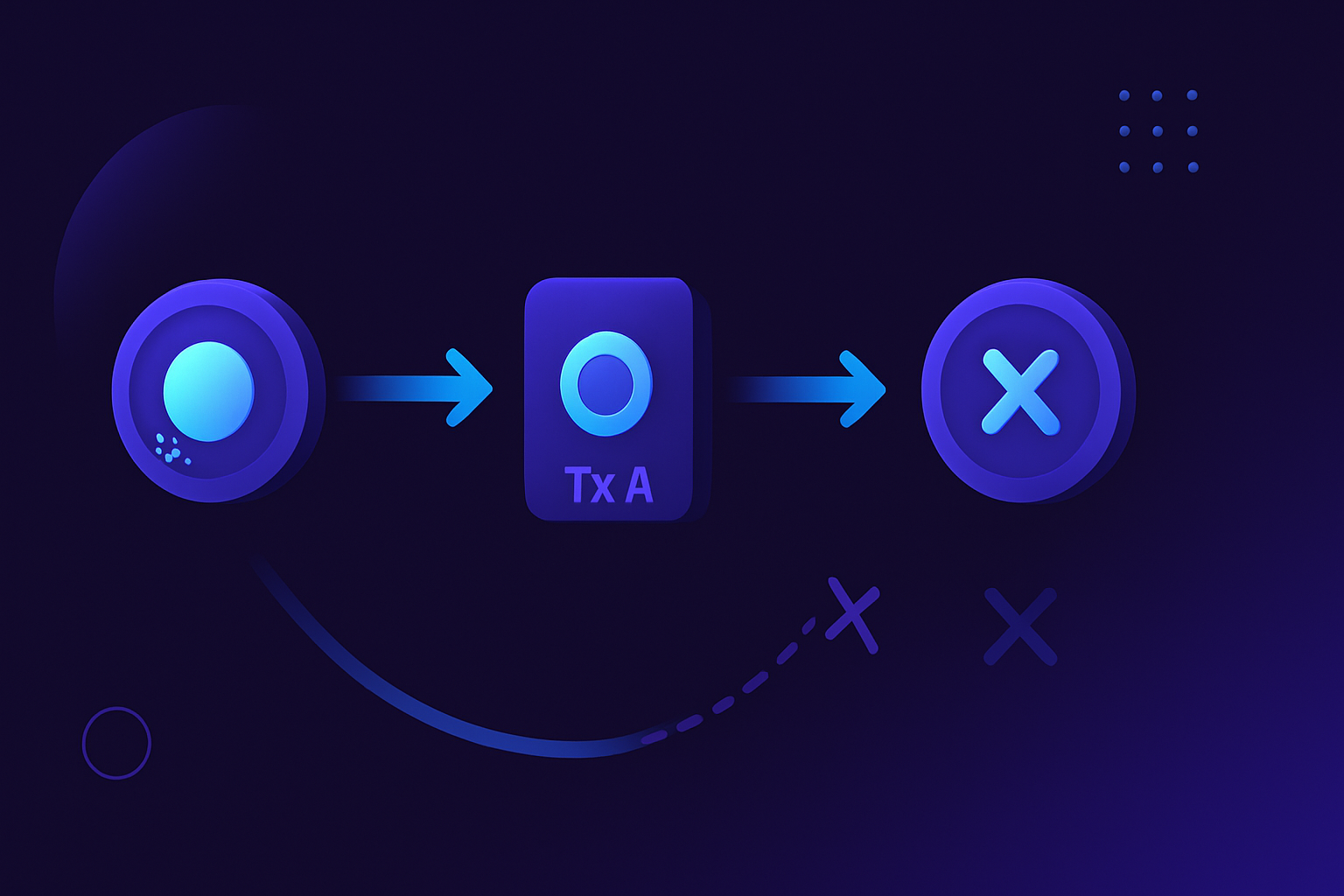
Pro Tip:A transaction is checked against the blockchain state at the moment it is processed, not the moment it was created. This means the outcome depends on what the shared record looks like when the transaction actually arrives to be applied, which is why timing and other people’s activity can change whether it succeeds.
Common reasons transactions fail in practice
Even though the details can vary between different systems, most failed or rejected transactions follow a few repeating patterns. They usually come down to how the shared state has changed, whether certain permissions are still in place, or how different transactions interact with each other. The points below are not a complete catalog of every possible error, but they cover the main ideas behind why something that looked valid at first can later stop fitting the rules of the live blockchain.
- The balance or resources changed before processing: other transactions spent some of the funds, so there is no longer enough to complete this one.
- Permissions or approvals changed: an earlier action removed or reduced the right to move certain assets, so the requested action is no longer allowed.
- Conflicting or already-used resources: Something else already changed, locked, or consumed the funds or state this transaction depends on.
- The transaction became outdated or was replaced: a newer transaction from the same account takes priority or changes expectations, so the older one is no longer accepted.
Key facts
Balance or resources changed
"The money or asset this transaction expects to use is no longer there in full."
Permissions or approvals changed
"This action was once allowed, but the current rules for this account or asset no longer permit it."
Conflicting or already-used resources
"Something else already changed, locked, or consumed the funds or state this transaction depends on."
Outdated or replaced transaction
"A newer request from the same source now represents the current intent, so the older one is not applied."
Pending, ignored, or clearly rejected
All of these cases follow the same pattern: the transaction no longer fits the current shared state when the network tries to apply it. When a transaction shows as pending, it usually means it has been seen by the network but has not yet been fully applied to the shared record. The decision about whether it fits the current state is still in the future. Many valid-looking transactions can be waiting at the same time, and only some of them will be processed in each update step. In some situations, a transaction may sit pending for long enough that it is effectively ignored or dropped instead of ever becoming clearly confirmed or clearly failed.

Why the network behaves this way
A blockchain exists so that many independent participants can rely on the same shared history, even if they do not know or trust each other directly. For that to work, every accepted transaction has to fit into one coherent story of who owns what and what has already happened. If the network allowed conflicting, outdated, or impossible changes, different people would see different realities, and the whole idea of a shared record would break down. Re-checking transactions, enforcing an order, and sometimes rejecting proposals that no longer fit are normal and expected behaviors that protect this consistency for everyone.
Simple mental model you can remember
The life of a transaction can be pictured as a short story. First, it is created and signed as a proposal to change the shared record in a specific way. Later, the network takes that proposal and checks it against the state of the blockchain at that moment in time. Depending on what has already happened, the transaction may be accepted and written into history, rejected because it no longer fits the rules, or simply never included if it is left waiting and eventually dropped. Context and timing shape which of these outcomes occurs.
- The transaction is correctly formed and properly signed according to the basic rules.
- The current balances, permissions, and other state still match what the transaction expects.
- No other transaction has already made conflicting changes to the same funds or data.
- The network actually processes the transaction instead of leaving it pending or dropping it.
Calm closing and TL;DR recap
Seeing a transaction fail or sit in a pending state for a long time can be unsettling, but it does not automatically mean that something is broken or that funds have vanished. It is often a sign that the network is carefully applying its rules to keep a single, consistent history. With the mental model of a transaction as a proposal checked against the latest state, confusing statuses become easier to interpret. Instead of feeling random, they reflect how the shared system balances many requests while protecting a reliable record for everyone.
TL;DR
- A transaction is a proposal, not a guarantee.
- Valid format and signature != inclusion.
- The transaction must still fit the live shared state.
- Other transactions can invalidate earlier assumptions.
- Pending, dropped, and rejected are different outcomes, not synonyms.