Core idea: a signature is authorization
A blockchain transaction is a proposal to change shared state. The network needs a way to verify that the sender is allowed to make that proposal. That is what a digital signature does.
A signature is a mathematical proof that the transaction was approved by whoever controls the private key for the sender. Nodes can verify that proof using the sender's public key (or address-derived public key), without ever seeing the private key.
In short: signatures make transactions verifiable authorization requests instead of unverifiable claims.
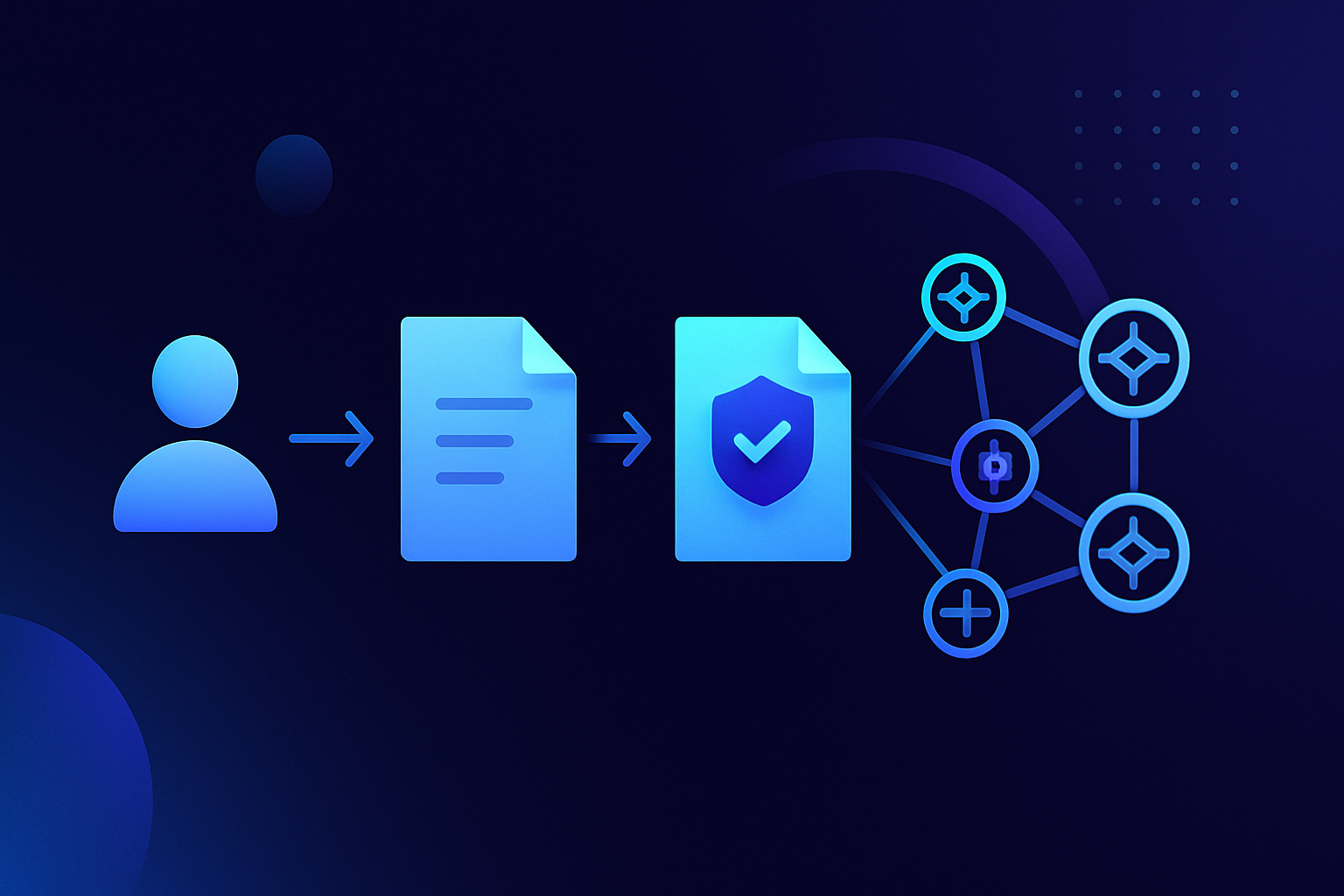
The happy path: create, sign, verify
- Your wallet builds a transaction message (what you want to do).
- Your wallet signs that message with your private key.
- You broadcast the signed transaction to the network.
- Nodes verify the signature before accepting it into their mempool.
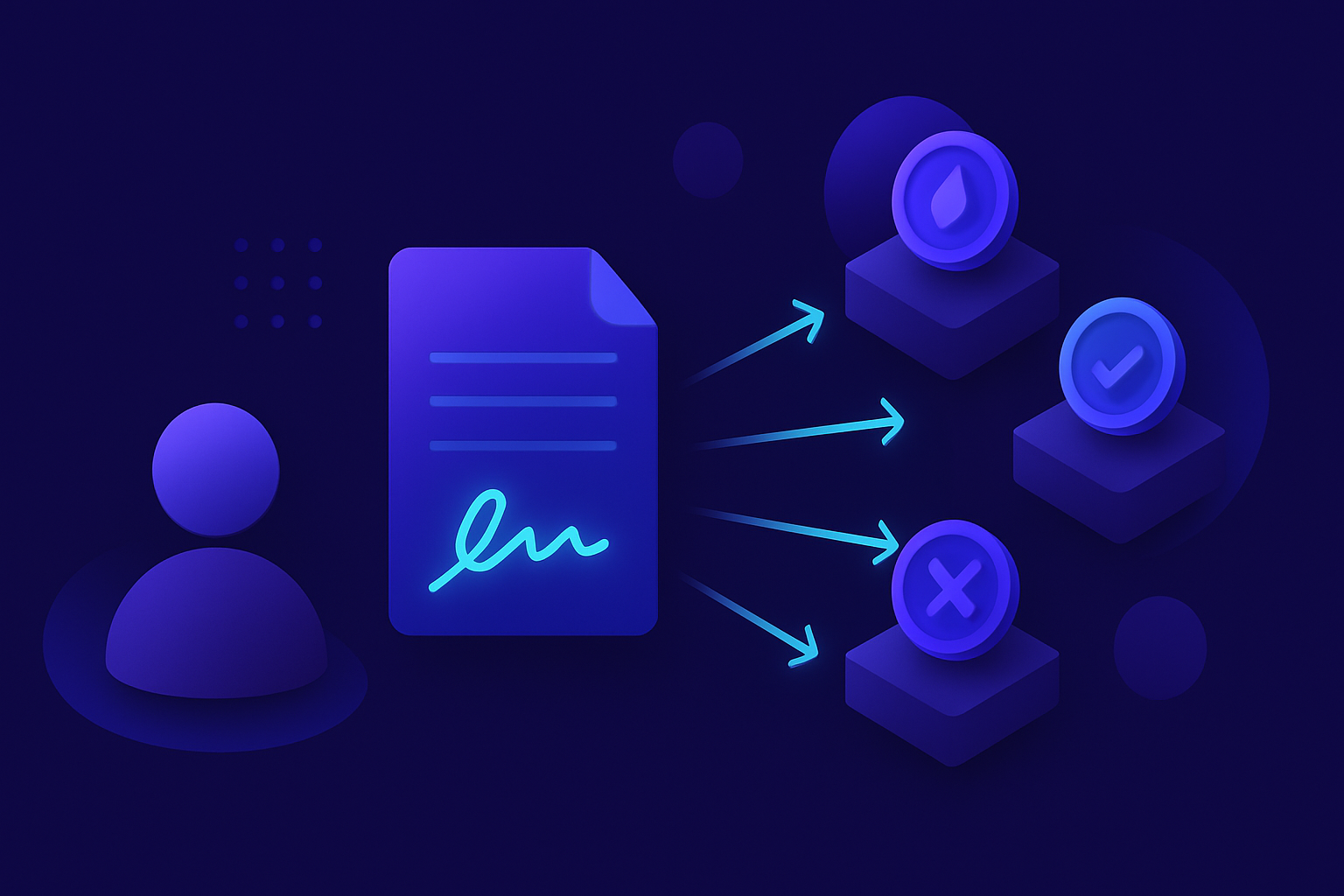
Notice what happens here: the signature is checked before inclusion in a block. Mempools are full of proposals, so nodes filter obvious invalid transactions early.
The signature binds your intent to the exact transaction data. If someone changes the recipient, amount, gas, or nonce, the signature no longer verifies.
Why signatures work on a public network
Blockchains are designed for untrusted networks. When you broadcast a transaction, many strangers will relay it and inspect it. The system still works because:
- The transaction can be public, but the private key never leaves your wallet.
- Anyone can verify the signature using public information, but nobody can forge it without the private key.
- Verification is fast, so every node can cheaply filter invalid transactions.
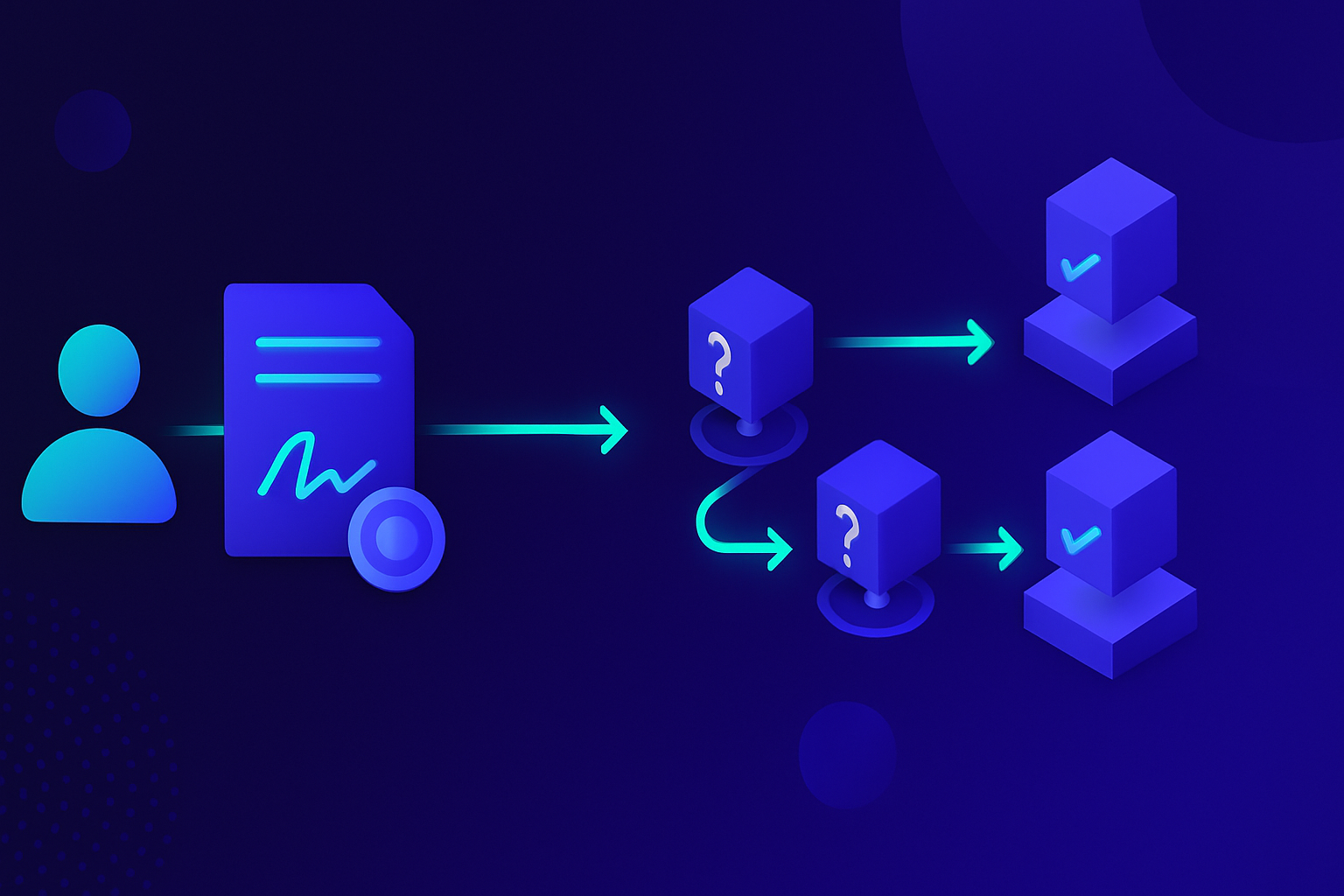
What a signature does NOT guarantee
- It does not guarantee that the transaction will be included in a block.
- It does not guarantee finality or prevent reorgs.
- It does not encrypt your transaction — most transaction contents remain visible to the network.
Pro Tip:If you want privacy, you need privacy mechanisms (e.g., mixers, shielded pools, rollups with privacy) — not signatures. Signatures prove who authorized the message, not who can read it.
Mental model summary
- A transaction is a signed proposal to change shared state.
- Signatures prove authorization and prevent tampering with the message.
- Nodes verify signatures before they treat a transaction as "valid enough" to relay.
If you remember one sentence: a signature is the network's way to accept your transaction as an authentic request — not as a completed change.
Next steps
To deepen this:
- Understand keys: What Are Cryptographic Keys (Private vs Public)?
- See transactions as proposals: What Is a Transaction?
- Learn why ordering matters: Mempool & Propagation