What is gas fee in crypto

Beginners and intermediate crypto learners worldwide who want to understand how gas fees work, why they exist, and how to manage them.

Gas fees are the price you pay to use a blockchain, similar to paying a small toll every time you cross a bridge. They are charged when you send crypto, swap tokens, mint NFTs, or interact with DeFi apps because the network is doing work for you. For many people, these fees feel random, especially when a simple transfer suddenly costs more than the amount being sent. During busy times, gas fees can jump sharply, and wallets often show confusing terms like gas price, gas limit, and “max fee.” In this guide, you will learn what gas fees actually are, who receives them, and how they are calculated behind the scenes. We will also look at why gas fees go up and down, how different networks compare, and practical ways to reduce what you pay without getting your transactions stuck.

Quick Answer: What Are Gas Fees?

Summary

  • Gas is a unit that measures how much computing work and storage a transaction needs on a blockchain.
  • Gas fees are paid in the network’s native token (for example, ETH on Ethereum).
  • Most of the fee goes to miners or validators, and on some networks a portion is also burned (destroyed).
  • The size of the fee depends on network congestion, transaction complexity, and gas price chosen by users.
  • Each blockchain has its own fee model, but all are based on paying for limited blockspace and computation.
  • Wallets often let you choose between faster but more expensive confirmation and slower but cheaper options.

Gas Fees in Everyday Terms

One way to think about gas fees is like a toll road. The highway has limited lanes, and only so many cars can pass at a time. When traffic is light, you move through the toll quickly and cheaply, but when it is rush hour, the road is crowded and people are often willing to pay more to get through faster. Gas fees work similarly on a blockchain. Each block has limited space, and only a certain number of transactions fit inside. When many people are trying to use the network at once, they effectively bid with higher fees to get their transactions included sooner. Another useful analogy is a delivery service. A small, simple package sent with slow shipping is cheap, while a heavy or urgent package with express delivery costs more. In crypto, a basic token transfer is like a small package, but a complex DeFi or NFT transaction is like a heavy one, so it needs more gas and usually costs more to process.
Article illustration
Gas Fees In Everyday Terms

Pro Tip:Paying a higher gas fee usually means your transaction is picked up and confirmed more quickly. For small amounts or non-urgent actions, it often makes more sense to choose a slower, cheaper option or wait for a less busy time. Always compare the fee size to the value of the transaction before you confirm.

How Gas Fees Actually Work on a Blockchain
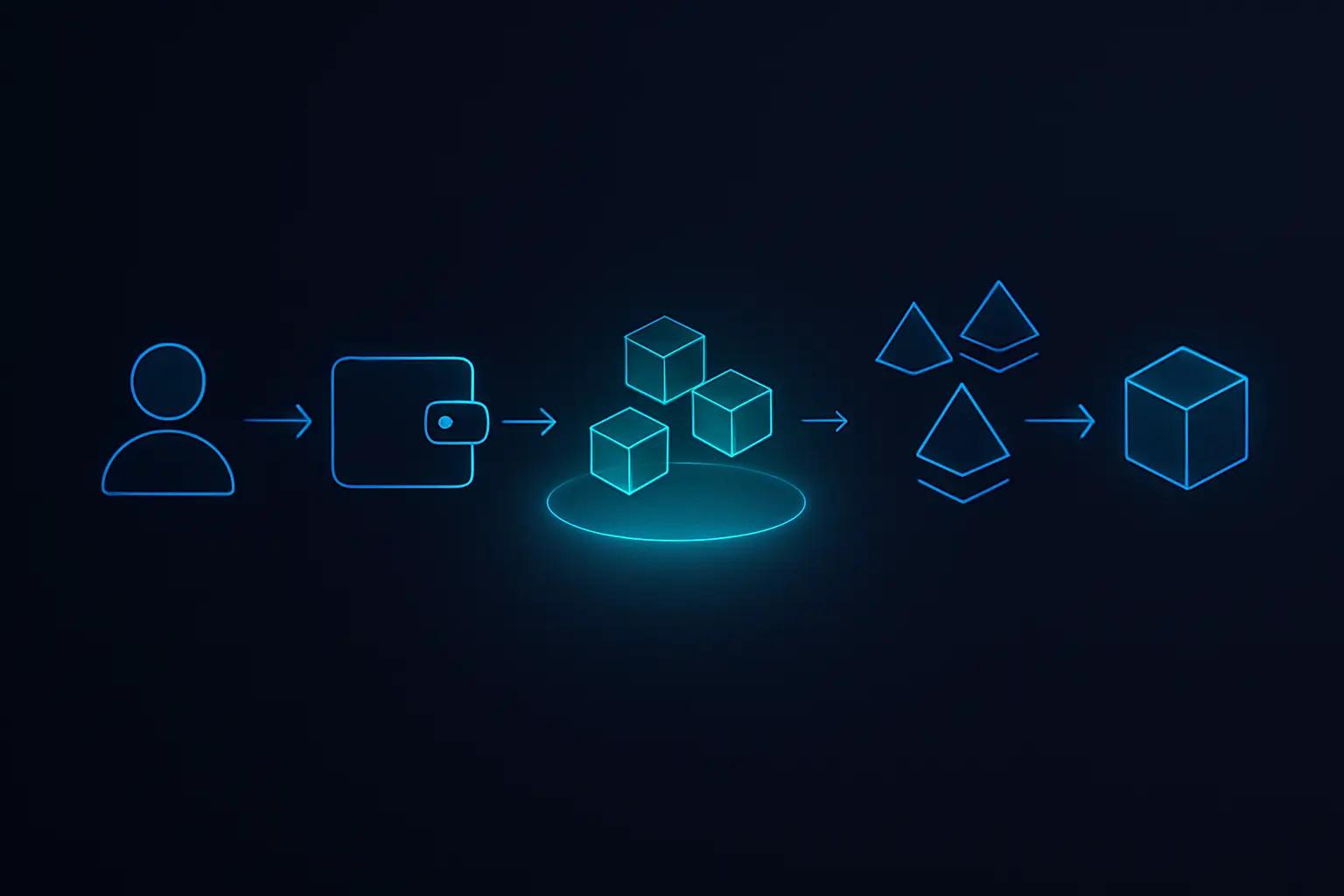
Gas exists to solve three problems at once: preventing spam, paying validators or miners, and managing limited blockspace. If transactions were free, attackers could flood the network with junk and make it unusable for everyone else. Every action you take on-chain uses computing resources and storage. The network measures this work in gas units, where simple operations cost fewer units and complex smart contract calls cost many more. The total gas used by all transactions in a block cannot exceed a protocol-defined limit. Because space in each block is scarce, users attach a gas price to their transactions, saying how much they are willing to pay per unit of gas. Validators or miners naturally prefer transactions that pay more, because they earn higher rewards for including them in the next block.
Article illustration
How Gas Flows Through The Network
  • On proof-of-work networks, most gas fees go to miners who include transactions in blocks.
  • On proof-of-stake networks, gas fees usually go to validators and sometimes to delegators who stake with them.
  • Some networks (like Ethereum after EIP-1559) burn a base portion of the fee, permanently removing it from supply.
  • The remaining part of the fee, such as tips or priority fees, goes directly to the block producer as extra reward.
  • These rewards give miners or validators a strong economic reason to secure and maintain the network.
Different blockchains implement gas and fees in their own way, but the core idea is the same: you pay for limited space and computation. Bitcoin does not use the word “gas,” but it charges transaction fees based on data size and demand for blockspace. Ethereum and many smart contract platforms use explicit gas units and gas prices, because transactions can run complex code. Other chains, including some low-fee layer-1s and layer-2 rollups, adjust this model to prioritize cheaper or faster transactions. Even when the details vary, you are always paying to have your transaction processed ahead of others who are competing for the same limited capacity.

Gas Price, Gas Limit, and Total Fee Explained

Most wallets show gas as a few separate numbers, but they all connect to one idea: total fee ≈ gas used × gas price, plus any protocol-defined base fee. The gas used depends on what your transaction actually does on-chain. You will often see both a gas limit and a gas price. The gas limit is the maximum amount of gas you are willing to let the transaction consume, while the gas price is how much you are willing to pay per unit of gas. Together, they define the maximum fee you might pay and how attractive your transaction is to validators.

Key facts

Gas unit
A small unit that measures how much computing work and storage a specific blockchain operation needs.
Gas limit
The maximum number of gas units you allow your transaction to consume; it caps how much work it can do.
Gas used
The actual amount of gas units your transaction ends up consuming when it is executed.
Gas price
How much you pay per unit of gas, usually shown in tiny fractions of the native token (like gwei for ETH).
Base fee
A protocol-set minimum fee per gas unit that must be paid and is often burned, depending on the network design.
Priority tip
An extra amount per gas unit you offer to encourage validators or miners to include your transaction sooner.
Total fee
The final cost of your transaction, typically calculated from gas used multiplied by the effective gas price (base fee plus any tip).
Article illustration
What Builds Your Total Gas Fee
Imagine you send a simple token transfer that uses 21,000 gas units on Ethereum. Your wallet shows an effective gas price of 20 gwei, where 1 gwei is one-billionth of 1 ETH. The total fee in ETH is 21,000 × 20 gwei = 420,000 gwei, which equals 0.00042 ETH. If 1 ETH is worth $2,000, then 0.00042 ETH is about $0.84. This simple calculation helps you see whether a transaction fee is reasonable compared to the value you are moving.

What Makes Gas Fees Go Up or Down?

Gas fees are not fixed; they behave more like surge pricing in ride-sharing apps. When many users want their transactions processed at the same time, they effectively bid against each other for limited blockspace. As demand rises, wallets and fee markets adjust suggested gas prices upward so that transactions still get confirmed quickly. When activity slows down, the opposite happens and fees can drop sharply, sometimes to just a few cents on certain networks.
  • Overall network congestion: more pending transactions in the mempool usually mean higher gas prices.
  • Transaction complexity: interacting with complex smart contracts or DeFi protocols uses more gas than a simple transfer.
  • Popular events: NFT mints, airdrops, or market crashes can trigger sudden spikes in demand and fees.
  • Layer-1 vs. layer-2: mainnets often have higher fees, while rollups and sidechains are usually cheaper but with different trade-offs.
  • Base fee rules: some protocols automatically raise or lower a base fee per gas depending on recent block usage.
  • Native token price: when the network’s token rises in fiat value, the same gas amount can become more expensive in dollars.

Pro Tip:Before sending a non-urgent transaction, quickly check current average gas fees on a block explorer or in your wallet’s fee suggestions. If the network is busy and prices look high, consider waiting for a quieter time or using a cheaper network instead of forcing your transaction through at any cost.

Common Actions That Require Gas Fees

Almost every action that touches a blockchain directly will cost some gas. You are paying for the network to record your transaction permanently and, if needed, to run smart contract code on your behalf. Some actions are light and cheap, while others are heavy and expensive. Understanding which activities consume more gas helps you plan your on-chain behavior and avoid surprises when fees spike.

Use Cases

  • Sending tokens between wallets on the same network, such as transferring ETH or stablecoins to a friend.
  • Swapping tokens on decentralized exchanges (DEXs), which call smart contracts to execute trades.
  • Adding or removing liquidity in DeFi pools, often involving multiple token transfers and contract interactions.
  • Minting, buying, or transferring NFTs, which can be more gas-intensive than simple token transfers.
  • Deploying new smart contracts, a heavy operation that typically requires a large gas limit and higher total fee.
  • Interacting with lending, borrowing, or yield farming protocols that run complex on-chain logic.
  • Bridging assets between different blockchains or layers, which may involve multiple transactions and security checks.

Case Study: Learning to Stop Overpaying for Gas

Samir is a freelance web developer from India who has been saving a little in crypto each month. One evening he decides to move some of his ETH into DeFi and make a few token swaps to diversify. When he opens his wallet during a busy market period, he is shocked to see gas fees of more than $40 for a single swap. Confused, Samir pauses instead of clicking “confirm.” He searches for explanations and learns that fees are high because the network is congested, and that gas price and gas limit control how much he pays. He also discovers that the same DeFi protocol is available on a cheaper layer-2 network with much lower typical fees. The next day, Samir tries again during a quieter time and uses the layer-2 version of the app. This time, each swap costs less than a dollar in gas, and his transactions confirm quickly. He comes away understanding that gas fees are not random, and that by choosing the right network and timing, he can plan his activity and avoid wasting money on fees.
Article illustration
A User Learns To Tame Gas Fees

How to Pay Less in Gas (Without Getting Stuck)

On most public blockchains, you cannot avoid gas fees entirely, because they are fundamental to how the network works. However, you often have more control over your costs than it first appears. By choosing when you transact, which network you use, and how you group or structure your actions, you can significantly reduce what you spend on fees. The goal is to balance cost and reliability so that your transactions are both affordable and confirmed in a reasonable time.
  • Check typical gas levels over a day and prefer off-peak hours when the network is less congested.
  • Use layer-2 networks or lower-fee chains for routine swaps, small payments, or frequent DeFi interactions when possible.
  • Batch actions when it makes sense, such as moving funds once instead of many small transfers over time.
  • Avoid unnecessary approvals and repeated contract interactions; only approve the amount of tokens you actually need.
  • Let trusted wallets suggest a gas limit unless you know what you are doing, and avoid setting it unrealistically low.
  • Learn how your wallet’s “slow,” “normal,” and “fast” fee presets work, and pick the cheapest option that still meets your timing needs.
  • Before big or complex actions, simulate or preview the transaction in a reputable tool to estimate gas costs in advance.
If you set your gas price too low, validators may ignore your transaction for a long time, leaving it pending or eventually dropped. On some networks, if a transaction runs out of gas or fails for another reason, you still lose the gas that was used up to that point. To avoid this, use realistic gas prices based on current network conditions and be careful when manually overriding wallet suggestions unless you fully understand the risks.

Risks and Mistakes Related to Gas Fees

Primary Risk Factors

Gas fees themselves are not a scam; they are a built-in part of how blockchains function. The risk comes from misunderstanding how they work or from trusting tools that promise unrealistic savings. If you are not careful, you can overpay during busy periods, lose money on failed transactions, or sign malicious contracts that drain your wallet under the cover of “gas optimization.” Knowing the main pitfalls helps you spot red flags before you click confirm.

Primary Risk Factors

Overpaying during congestion
Submitting non-urgent transactions when the network is extremely busy can make you spend far more on gas than the action is worth.
Failed transactions still costing gas
If a transaction runs out of gas or reverts, you usually lose the gas used so far, even though the main action did not complete.
Malicious contracts with high gas use
Scam contracts can hide expensive operations or drain tokens while appearing like normal approvals, leading to very high gas consumption and losses.
Confusing token vs. fiat cost
A fee that looks small in ETH or another token can be large in your local currency when prices are high, and vice versa.
Untrusted gas-saving tools
Browser extensions or websites that promise huge gas savings may be unsafe or request dangerous permissions to your wallet.
Stuck pending transactions
Sending a transaction with too low a gas price can leave it pending for a long time and may require extra steps to replace or cancel it.

Security Best Practices

© 2025 Tokenoversity. Tut ils dretgs resalvads.