What Is Staking in Crypto?

Beginners and intermediate crypto learners worldwide who want to understand and possibly use staking.

In crypto, staking means locking or delegating your coins to help run a proof-of-stake blockchain, and earning rewards in return. Instead of using energy-heavy mining, these networks rely on stakers to keep transactions secure and honest. For long-term holders, staking can feel like earning interest on coins that would otherwise just sit in a wallet. But those rewards come with trade-offs around lock-up periods, platform trust, and the risk that your coins fall in price while they are staked. This guide is for beginners and curious intermediates who want staking explained in plain language. By the end, you will understand how staking works, the main ways to do it, and how to decide whether it fits your own risk tolerance and time horizon.

Quick Summary: Is Staking for You?

Summary

  • Staking means locking or delegating PoS coins to help secure a network and earn rewards.
  • It generally suits long-term holders who do not plan to trade their coins frequently.
  • Main benefits are extra yield, compounding over time, and supporting decentralization.
  • Key risks include coin price drops, lock-up and unbonding delays, and platform or smart contract failures.
  • You can stake through exchanges, your own wallet, DeFi apps, or by running a validator, each with different trade-offs.
  • Start with small amounts and simple setups before trying advanced or high-APY products.

From Mining to Staking: Proof-of-Stake Basics
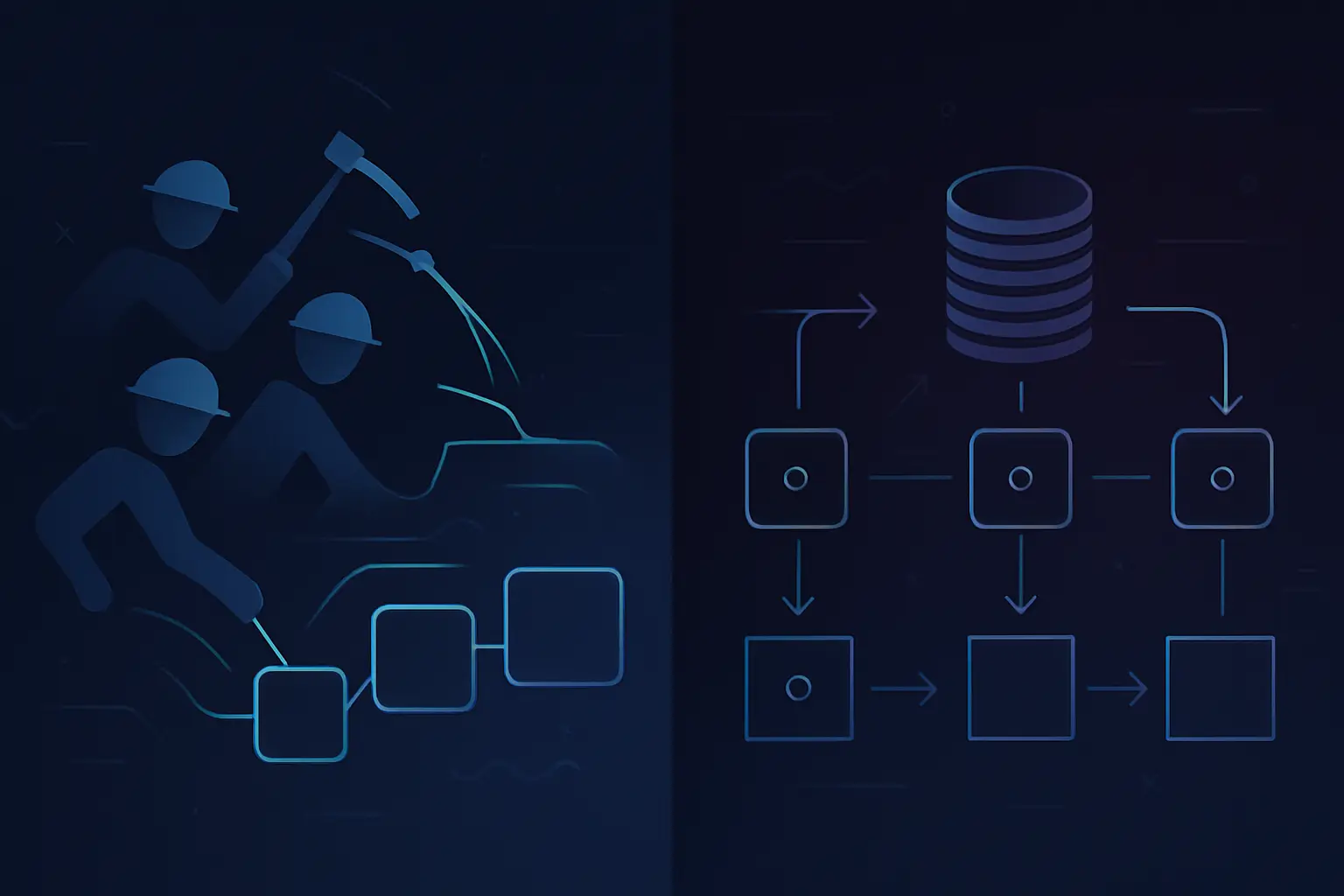
Every public blockchain needs a way for many computers to agree on which transactions are valid. In older networks like Bitcoin, this is done with proof-of-work, where miners burn electricity to solve puzzles and win the right to add new blocks. In proof-of-stake systems, the role of miners is replaced by validators who lock up coins as collateral. The protocol randomly chooses validators, weighted by how many coins they have staked, to propose and confirm blocks. If validators behave honestly, they earn rewards; if they cheat or go offline, they can lose part of their stake. This design greatly reduces energy use compared to mining and ties the security of the network directly to the value that participants have at risk inside it.
Article illustration
PoW vs. PoS at a Glance
  • Proof-of-stake replaces energy-intensive mining with validators who lock coins as security collateral.
  • Security comes from the economic value at stake: misbehaving validators risk losing part of their funds.
  • PoS networks typically use far less electricity than proof-of-work chains, making them more energy efficient.
  • Staking rewards are used to incentivize honest validation and attract enough stake to secure the network.
  • Because hardware needs are lower, more people can participate indirectly through delegation, supporting decentralization.

How Crypto Staking Actually Works
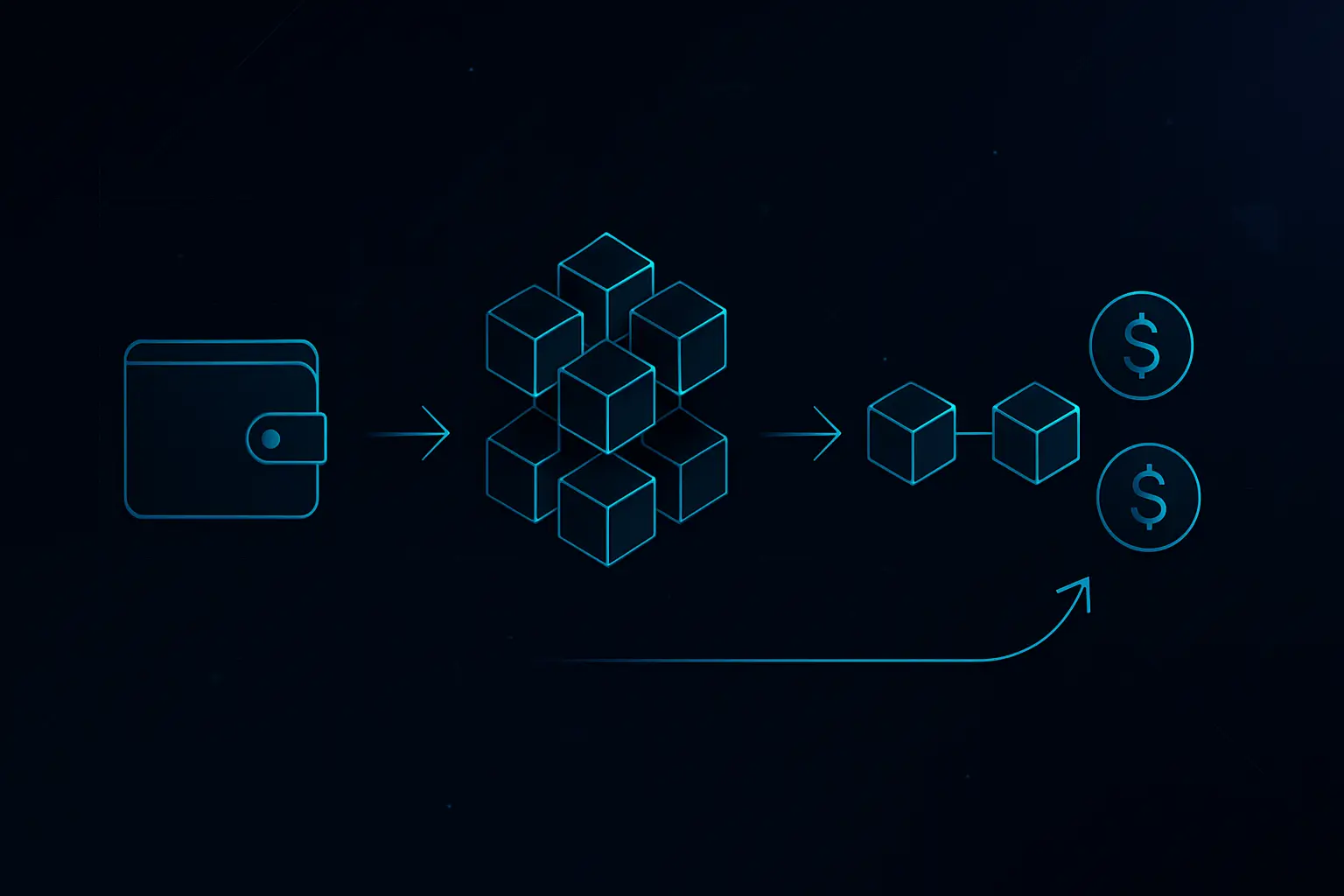
When you stake, you either lock your coins directly in the protocol or delegate them to a validator who runs the necessary hardware. Your coins remain yours, but the network treats them as backing that validator’s behavior. Validators bundle transactions into blocks and attest that they are valid. In return, the protocol issues staking rewards, often a mix of new tokens and transaction fees, and shares them with everyone who has staked or delegated. You are not lending coins to the validator like a bank loan; they cannot simply run away with your stake in most designs. However, if the validator misbehaves or is poorly run, part of the stake associated with them can be penalized, which is why validator choice and platform trust matter.
Article illustration
Staking Reward Flow
  • Acquire a proof-of-stake coin on an exchange or on-ramp that you can legally use in your region.
  • Decide how you will stake: through a centralized exchange, a non-custodial wallet with delegation, a DeFi protocol, or your own validator.
  • Research and select a validator or platform, checking fees, reputation, uptime, and decentralization impact where possible.
  • Initiate staking by locking or delegating your tokens via the chosen interface, carefully confirming network, amount, and any lock-up terms.
  • Let rewards accrue over time; some setups auto-compound, while others require you to manually claim and restake.
  • When you want to exit, start the unstaking or unbonding process and wait out any protocol-defined delay before your coins become fully liquid again.

Different Ways to Stake: Custodial, Non-Custodial, and Liquid

In everyday conversation, people say “I’m staking” to describe several different setups. The main difference between them is who controls the private keys and how much technical work you take on yourself. Custodial staking through exchanges or apps is usually the easiest: you click a few buttons and the platform handles validators, but they also hold your coins. Non-custodial delegation keeps your coins in a wallet you control while you point your stake at a validator. More advanced users may run a solo validator, managing hardware and uptime themselves, or use liquid staking protocols that give you a tradable token representing your staked position. Each flavor trades off simplicity, control, yield, and risk in different ways.

Key facts

Custodial / exchange staking
Platform holds your coins and stakes on your behalf; very simple interface, but you rely on the company’s security and policies. Suits beginners and small amounts; low technical complexity but higher custody risk.
Non-custodial delegation
You keep coins in your own wallet and delegate stake to a validator; you choose who to support and can often redelegate. Suits users comfortable with self-custody; moderate complexity and more control.
Solo validator
You run your own validator node with required hardware, uptime, and security; you earn rewards directly and may set your own commission. Suits advanced users with technical skills and larger capital; highest complexity and responsibility.
DeFi / liquid staking
You deposit coins into a smart contract and receive a liquid token that represents your staked position and can be used in DeFi. Suits yield-focused users who accept smart contract and protocol risk; complexity varies from medium to high.

Pro Tip:Marco first used an exchange’s simple “earn” feature, then later moved part of his coins to a hardware wallet and delegated to a community validator. His path shows a practical approach: begin with an easy custodial option, learn how staking and self-custody work, then gradually shift toward setups that give you more control and decentralization if they match your skills and risk comfort.

Rewards, APY, and Lock-Ups: The Economics of Staking

Most staking rewards come from a mix of new token issuance (inflation) and transaction fees paid by users of the network. The protocol distributes these rewards to validators and stakers as payment for keeping the chain secure and available. Annual Percentage Yield (APY) tells you how much your stake could grow over a year, assuming rewards are compounded. Very high APYs can look attractive but may signal higher token inflation, extra risk, or experimental DeFi layers on top. Lock-up and unbonding periods also affect the real value of your rewards, because you may not be able to sell quickly during market swings. When comparing opportunities, think in terms of net return after fees, inflation, and your own need for liquidity.
  • Network inflation rate: higher issuance can mean higher nominal rewards but also more dilution of each coin.
  • Total stake vs your share: your portion of the total staked pool largely determines your share of rewards.
  • Validator commission: validators take a fee from rewards before passing the rest to delegators or users.
  • Compounding frequency: regularly restaking claimed rewards can significantly boost long-term APY.
  • Lock-up and unbonding periods: longer delays reduce flexibility and can increase the impact of price swings on your net return.

Article illustration
What Shapes Your APY

Why People Stake: Main Use Cases

Staking is most useful when you already believe in a network and plan to hold its tokens for a while. Instead of leaving coins idle, you can put them to work helping secure the chain and earning extra yield. Some people stake mainly to support decentralization and governance, while others use staking as one building block in a broader DeFi or portfolio strategy. Your reasons will shape which staking method and risk level make sense for you.

Use Cases

  • Earning extra yield on long-term holdings you would keep anyway, turning idle coins into a steady reward stream.
  • Supporting network security and decentralization by delegating to independent validators instead of only large custodians.
  • Building a portfolio yield strategy where staking rewards complement other income sources like lending or real-world income.
  • Gaining or strengthening governance rights in networks where staked tokens are required to vote on proposals.
  • Unlocking more advanced DeFi strategies by using liquid staking tokens as collateral or liquidity in other protocols.
  • Helping a small business or DAO treasury earn moderate on-chain yield while keeping control of core assets, within a defined risk policy.

Case Study / Story

Aisha is a 29-year-old software tester in Malaysia who has quietly bought a few proof-of-stake coins she believes in. She does not enjoy day trading, so she starts searching for ways to earn more on her holdings and keeps seeing the term staking in exchange apps and social media. At first, she is confused by lock-up periods, slashing, and warnings about scams. She compares her local exchange’s simple staking product with guides on non-custodial wallets and community validators, and she notices that the highest APY offers come from complex DeFi pools she barely understands. Aisha decides to start small by staking a modest amount through her main exchange, where she already passed KYC and feels comfortable with the interface. Over a few months, she tracks rewards, reads about validator selection, and learns how self-custody works. With more confidence, she moves part of her holdings to a hardware wallet and delegates to a well-reviewed community validator, keeping the rest on the exchange for simplicity. She ignores a suspicious pool promising extreme returns and instead builds a diversified, understandable setup. Her takeaway is clear: grow your staking strategy step by step, only using platforms and risks you truly understand.
Article illustration
Aisha Learns to Stake

Risks, Slashing, and Security Considerations

Primary Risk Factors

Staking is often marketed as safe “passive income,” but it is not risk-free. Your coins can still fall in price, sometimes faster than you earn rewards, especially in volatile markets. Many networks also have lock-up and unbonding periods, meaning you cannot instantly sell or move your stake. On top of that, there are technical and platform risks: validators can be slashed for misbehavior, custodial platforms can fail, smart contracts can be hacked, and regulations or tax rules can change in ways that affect your returns. Understanding these risks before you stake helps you size your positions wisely, diversify across platforms, and avoid chasing yield blindly.

Primary Risk Factors

Price risk
The token you stake can drop in value, so your holdings may be worth less even after rewards. Mitigate by only staking coins you are comfortable holding long term and avoiding overconcentration.
Lock-up and illiquidity
During lock-up and unbonding periods, you cannot quickly sell or move your stake. Mitigate by understanding unbonding times, keeping an emergency liquid balance, and avoiding locking funds you may need soon.
Validator slashing
If your validator cheats or is offline, part of the stake linked to them can be penalized. Mitigate by choosing reputable validators with good uptime, diversified operators, and avoiding unknown or suspicious nodes.
Custodial / platform risk
Exchanges or custodial services can be hacked, mismanaged, or freeze withdrawals. Mitigate by limiting how much you keep on any single platform and preferring regulated, transparent providers when possible.
Smart contract risk
DeFi and liquid staking protocols rely on code that can have bugs or be exploited. Mitigate by checking audits, sticking to well-known projects, and being skeptical of unusually high APYs.
Regulatory and tax surprises
Staking rewards may be taxed differently in each country, and new rules can affect platforms or tokens. Mitigate by keeping records of rewards and consulting local guidance or a tax professional where needed.

Security Best Practices

  • Priya jumped into a new DeFi pool promising huge APY without checking audits or who ran the project, and a bug drained the funds. Let her experience remind you that if yields look unrealistically high, you must slow down, research smart contract and platform risk, and never stake more than you can afford to lose in experimental products.

Pros and Cons of Crypto Staking

Pros

Can earn additional yield on coins you already plan to hold for the long term.
Helps secure proof-of-stake networks and can support decentralization when you choose diverse validators.
Rewards can compound over time, potentially boosting long-run returns compared to holding idle.
Some networks offer relatively predictable base reward ranges, especially when parameters are transparent.
Non-custodial staking options let you keep control of your private keys while still earning rewards.

Cons

Token price volatility can easily outweigh staking rewards during market downturns.
Lock-up and unbonding periods reduce your ability to react quickly to market or personal needs.
Choosing validators, platforms, and protocols adds technical and security complexity for beginners.
Custodial and DeFi staking introduce additional risks such as hacks, mismanagement, or smart contract bugs.
Tax and regulatory treatment of staking rewards can be unclear and may require extra record-keeping.

Staking vs. Other Ways to Earn on Crypto
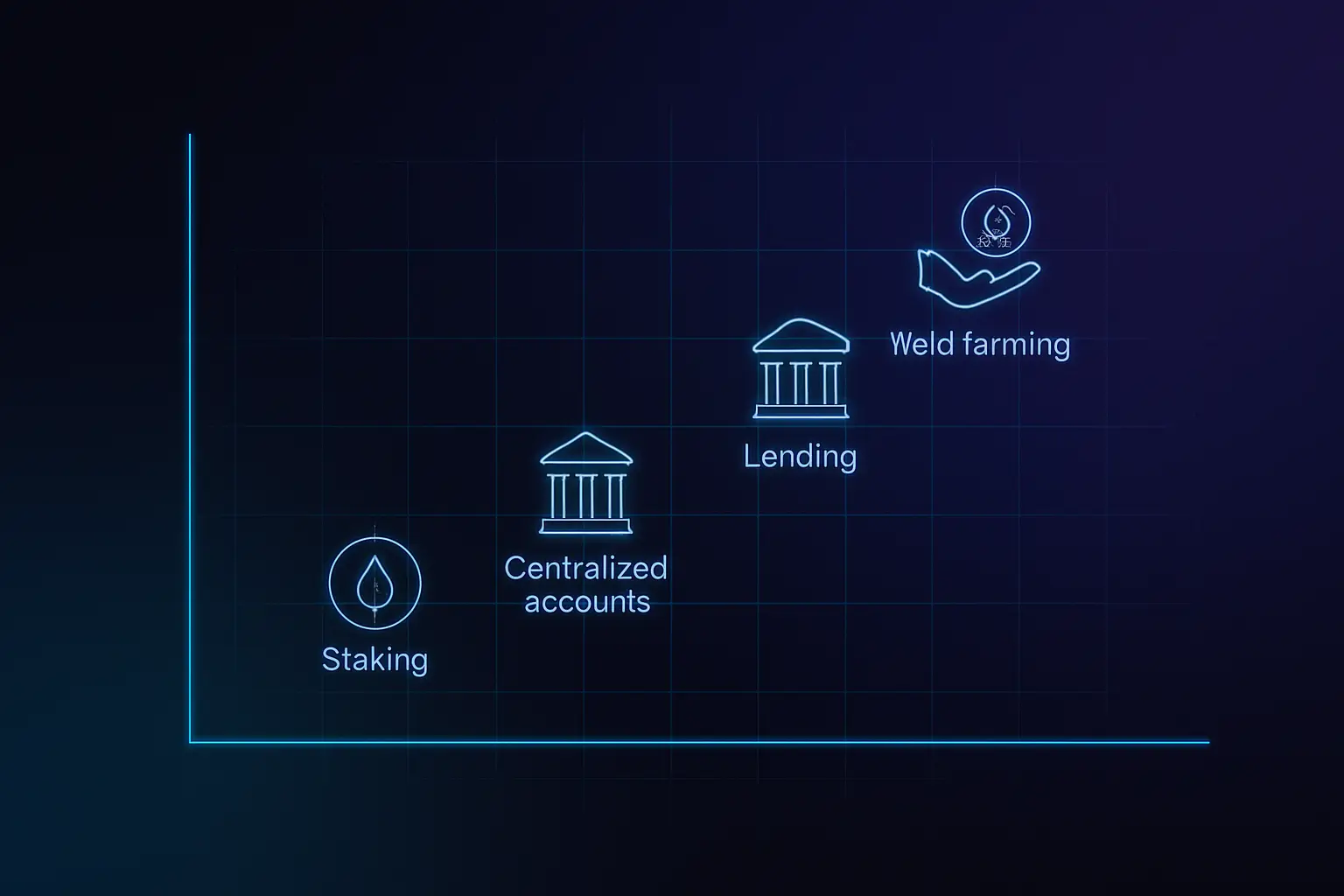
Product Risk Source Custody Complexity Typical User Reward Variability Staking Protocol design, validator performance, price volatility, sometimes smart contract risk. Can be custodial (exchange) or non-custodial (wallet delegation or native staking). Low to medium; basic staking is simple, validator selection adds nuance. Long-term holders and network supporters seeking moderate, protocol-based yield. Moderate; depends on network parameters, total stake, and validator fees. Centralized interest accounts Platform solvency, lending counterparties, and business practices. Fully custodial; platform controls your coins. Low; deposit coins and watch balance grow, but with opaque underlying risks. Users who prefer a bank-like experience and trust the provider. Can change based on market demand and platform policies, sometimes without much notice. P2P lending Borrower default, collateral management, and platform reliability. Usually custodial or semi-custodial via the lending platform. Medium; requires understanding terms, collateral, and liquidation rules. Users comfortable assessing credit and collateral risks for extra yield. Variable; depends on interest rates, loan demand, and borrower risk profile. DeFi yield farming Smart contract bugs, protocol design, market volatility, and complex interactions. Non-custodial but controlled by smart contracts rather than a single company. High; often involves multiple tokens, pools, and strategies. Advanced DeFi users willing to actively manage positions and risks. Very high; yields can spike or collapse quickly as incentives and liquidity change.
Article illustration
Where Staking Fits In

Getting Started: A Step-by-Step Staking Checklist

A safe first experience with staking matters more than squeezing out the very highest APY. Starting with small amounts on a platform you understand gives you room to make mistakes and learn without major consequences. Focus on basic security, clear documentation, and transparent fees before you worry about advanced strategies. As you gain confidence, you can explore non-custodial options, validator selection, or liquid staking, always keeping your risk tolerance and time horizon in mind.
  • Choose a reputable proof-of-stake coin that you understand and are comfortable holding long term.
  • Research official documentation and community resources to see which staking methods (exchange, wallet, DeFi) are supported.
  • Set up a secure wallet if you plan to use non-custodial staking, and back up your seed phrase safely offline.
  • Buy a small test amount of the coin on a regulated or well-known exchange available in your region.
  • Stake only a portion of your holdings at first, carefully reading lock-up, unbonding, and minimum amount rules.
  • Monitor rewards, validator performance, and fees for a few weeks to confirm everything behaves as expected.
  • Keep basic records of staking transactions and rewards so you can handle any tax or reporting requirements later.

Article illustration
Your Staking Checklist

How to Get Tokens Ready for Staking

Before you can stake, you need the right kind of token and a place where staking is supported. That usually means choosing a proof-of-stake coin, buying it through a reputable exchange or on-ramp, and then deciding whether to keep it there or move it to your own wallet. Some platforms let you stake directly after purchase, while others require you to transfer coins to a dedicated wallet or DeFi app. Always double-check the network you are using and any withdrawal fees before moving funds.

  1. Step 1:Research proof-of-stake coins, focusing on their purpose, track record, and available staking options.
  1. Step 2:Open and verify an account with a reputable, regulated exchange or on-ramp that lists your chosen coin, if available in your region.
  1. Step 3:Deposit fiat or other crypto, then buy the PoS token in the trading or buy/sell section.
  1. Step 4:If you plan to stake non-custodially, withdraw the tokens to your own compatible wallet, confirming the correct network and address.
  1. Step 5:Connect your wallet or exchange account to the staking interface or app you plan to use, and review any minimums, fees, and lock-up terms before staking.

FAQ: Common Questions About Crypto Staking

Final Thoughts: When Staking Makes Sense

May Be Suitable For

  • Long-term holders of proof-of-stake coins who want moderate on-chain yield.
  • Users willing to learn basic security, validator selection, and platform risk before committing larger amounts.

May Not Be Suitable For

  • People who need immediate access to their funds or have very short investment horizons.
  • Users who are uncomfortable with price volatility or any chance of loss of principal.
  • Anyone mainly chasing extreme APYs from complex products they do not fully understand.

Staking is best viewed as a tool for patient holders, not a shortcut to getting rich quickly. It lets you earn extra coins while helping secure proof-of-stake networks, but those rewards come with real trade-offs around price risk, lock-ups, and platform choice. If you take time to understand how your chosen network works, start with small amounts, and prefer transparent, reputable platforms, staking can become a sensible part of a long-term crypto plan. Move gradually, diversify your approaches, and only commit funds and complexity levels that match your own risk tolerance and experience.

© 2025 Tokenoversity. All rights reserved.